
Why Your Upstairs Is Always Hotter Than Downstairs
The second floor of your home turning into a sweatbox while the first floor stays cool is one of the most common complaints homeowners face during the warm season in the Central Valley. This temperature gap is not random, and it is not something you have to live with year after year. Hot air naturally rises, your ductwork was likely sized for the whole house rather than each floor, and your attic radiates heat downward into the upper rooms throughout the day. Add direct sun exposure on west-facing bedrooms, and the second floor can sit ten or fifteen degrees warmer than the thermostat reading downstairs. The good news is that every single one of these causes has a fix, and most of them are far more affordable than people assume. Knowing what is driving the imbalance is the first step toward fixing it for good. Breezio AC has spent over three decades diagnosing exactly these kinds of comfort problems across Visalia, Tulare, Fresno, and the surrounding communities. This guide walks you through the real reasons your upstairs runs hot and what you can do about it.
The Main Reasons Your Upstairs Is Always Hotter Than Downstairs
Several physical forces work together to make the upper level of any two-story home warmer than the lower level. Understanding each cause helps you target the right fix rather than guessing at solutions that waste time and money. Heat rises by nature, attics trap solar heat all day long, and most HVAC systems were not designed with zoned cooling in mind. Insulation gaps, leaky ducts, and undersized return vents make the problem worse over time. Once you understand these factors, you can stop fighting symptoms and start solving the actual issue. The following sections break down the three biggest culprits behind a hot upstairs.
Heat Rising Causes Your Upstairs to Be Hotter Than Downstairs
The basic physics of warm air movement explains a huge portion of the temperature difference between your two floors. Warm air is less dense than cool air, so it naturally floats upward while cooler, denser air sinks to the lower levels of your home. This happens continuously throughout the day, even when your air conditioner is running at full blast. By late afternoon, the upstairs has accumulated hours of rising warm air from cooking, appliances, body heat, and electronics on the first floor. Your thermostat, almost always located downstairs, has no idea the second floor is climbing into the eighties because it only reads the temperature at its own location. The system shuts off the moment downstairs hits the set point, leaving the upstairs to bake.
The stack effect makes this rising heat problem even worse during the hottest months in Visalia and the surrounding areas. As warm air rises through your home, it pulls cooler air in through gaps in your foundation, doors, and lower windows to replace it. This creates a continuous loop where hot air keeps moving upward and getting trapped against your ceilings. Two-story homes with open staircases or vaulted entryways feel this effect strongly because there is nothing to slow the upward flow of warm air. The taller the home, the more pronounced the stack effect becomes. By evening, your upstairs bedrooms can feel ten degrees hotter than your living room.
Most homes built in California over the past few decades use a single-zone HVAC system, which means one thermostat controls cooling for the entire house. This setup cannot account for the natural rise of warm air or the different cooling needs of each floor. The result is a system that overcools the downstairs while never quite catching up to the upstairs. Zoning systems, smart dampers, and dedicated returns on the upper level can balance this out, but they require professional design and installation. A trained HVAC technician can measure the airflow on each floor and recommend the right solution for your specific home layout. Need help balancing your home’s airflow? Click here for our air conditioning services.
Attic Heat Causes Your Upstairs to Be Hotter Than Downstairs
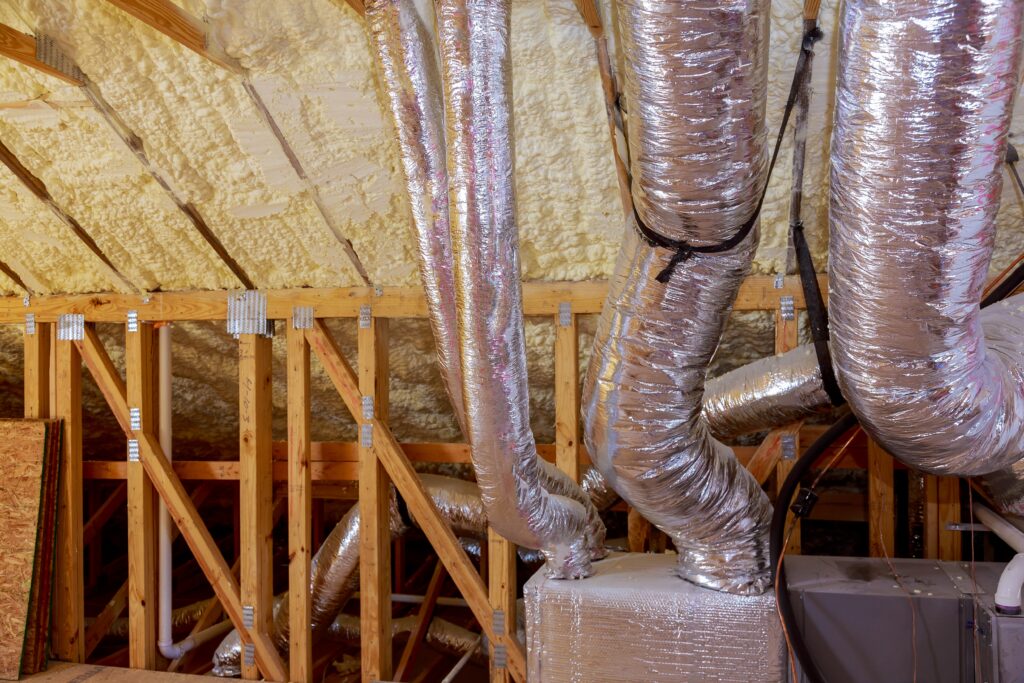
The attic above your second floor can easily reach 140 degrees or higher on a typical summer afternoon in Visalia, even when outdoor temperatures are in the upper nineties. That superheated air sits just a few inches above your bedroom ceilings, separated only by a thin layer of insulation. Heat naturally moves from hot areas to cooler ones, so all that attic heat radiates down into your upstairs rooms throughout the day. If your insulation is thin, compressed, or missing in spots, the transfer of heat speeds up dramatically. Many homes in the Central Valley were built decades ago with insulation levels that do not meet today’s standards. Upgrading attic insulation is one of the most cost-effective ways to cool down a hot upstairs.
Attic ventilation plays an equally important role in keeping your upper floor comfortable during the summer months. Proper ventilation uses ridge vents, soffit vents, and sometimes powered attic fans to flush hot air out of the attic and pull cooler air in. When ventilation is blocked, undersized, or missing, heat builds up to extreme levels and has nowhere to go except down into your living space. A well-ventilated attic stays much closer to the outdoor temperature, which significantly reduces the heat load on your upstairs. Radiant barriers installed under the roof deck can also reflect a large portion of solar heat back outside before it ever penetrates your attic floor. These improvements work together to keep that punishing summer heat from migrating into your bedrooms.
Ductwork running through an uninsulated or poorly insulated attic faces another major challenge that affects your upstairs comfort. The cold air your air conditioner produces has to travel through ducts surrounded by air that may be 140 degrees, which warms the air before it ever reaches your supply vents. By the time the cooled air arrives in your upstairs bedrooms, it has lost a noticeable amount of its cooling power. Sealing and insulating your ducts in the attic prevents this loss and delivers much colder air to the rooms that need it most. Combined with better attic insulation and ventilation, these improvements can drop your upstairs temperature by several degrees. Want to learn more about how your ductwork affects comfort? Click here for our air ducts service.
Poor Ductwork Causes Your Upstairs to Be Hotter Than Downstairs
The ductwork in most two-story homes was sized and laid out for convenience during construction, not for balanced cooling between floors. Builders often run the longest, most twisted duct runs up to the second floor because the air handler is located in a downstairs closet or garage. By the time conditioned air fights its way through all those bends and long stretches, it arrives at the upstairs vents with much less force and volume than the downstairs vents. This means your upstairs rooms simply do not receive enough cold air to overcome the heat load they face. Static pressure, friction loss, and undersized trunk lines all compound this problem. A properly designed duct system delivers balanced airflow to every room regardless of floor.
Leaky ducts make the upstairs cooling problem dramatically worse and waste a huge amount of the cooling energy you pay for every month. Industry studies show that the average home loses 20 to 30 percent of its conditioned air through duct leaks, joints, and disconnected sections. When those leaks happen in the attic, you are essentially paying to cool an unconditioned space while your upstairs bedrooms suffer. Mastic sealant, foil tape, and aeroseal treatments can close up these leaks and restore the airflow your system was designed to deliver. After proper duct sealing, many homeowners report that their upstairs finally cools down to match the rest of the house. Annual duct inspections catch new leaks before they become major comfort problems.
Return air is the other half of the ductwork equation, and it is often overlooked in older two-story homes. For cool air to enter a room, warm air has to leave through a return vent at roughly the same rate. Many homes have only one or two centrally located returns on the first floor, which means upstairs bedrooms have no efficient way to release their hot air. Without proper returns on the upper level, your system struggles to circulate air through the rooms that need it most. Adding dedicated returns upstairs, jump ducts above doors, or transfer grilles can completely change how well your system cools the second floor. A skilled HVAC contractor can assess your return air situation and recommend targeted improvements that make a real difference.
How to Fix an Upstairs That Is Always Hotter Than Downstairs
Now that you understand why your upstairs runs hot, the next step is choosing the right combination of fixes for your specific home. Some solutions are quick and inexpensive, like changing filters and adjusting vents, while others involve professional upgrades that pay off for decades. The best approach usually involves layering several improvements together so they reinforce one another. A single fix rarely solves the entire problem because the causes are interconnected. A professional load calculation and home assessment can identify exactly which combination of fixes will give you the biggest comfort improvement for your budget. Below are three proven strategies that consistently deliver results in Central Valley homes.
Zoning Systems Fix an Upstairs That Is Always Hotter Than Downstairs
A zoning system divides your home into separate temperature areas, each with its own thermostat and motorized dampers inside the ductwork. When the upstairs gets hot, the system opens dampers to that zone and closes them to areas that are already cool, directing more cold air exactly where it is needed. This approach treats the natural temperature differences between floors instead of fighting against them. Homeowners can set the upstairs cooler at night for comfortable sleeping while keeping the downstairs at a more efficient setting during the day. Zoning typically reduces overall energy use because the system stops overcooling rooms that do not need it. The comfort improvement on the upper floor is usually dramatic and immediate.
Smart thermostats paired with a zoning system give you even more control over your home’s comfort and energy use. Modern systems can learn your schedule, adjust temperatures based on occupancy, and let you change settings from your phone anywhere in the world. Some advanced setups use room sensors that report the actual temperature in each space rather than just at the thermostat location. This means your system can respond to a hot upstairs bedroom even if the downstairs hallway is already at the set point. The technology has come a long way in recent years and works seamlessly with most modern HVAC equipment. A qualified installer can match the right thermostat and zoning controls to your existing system.
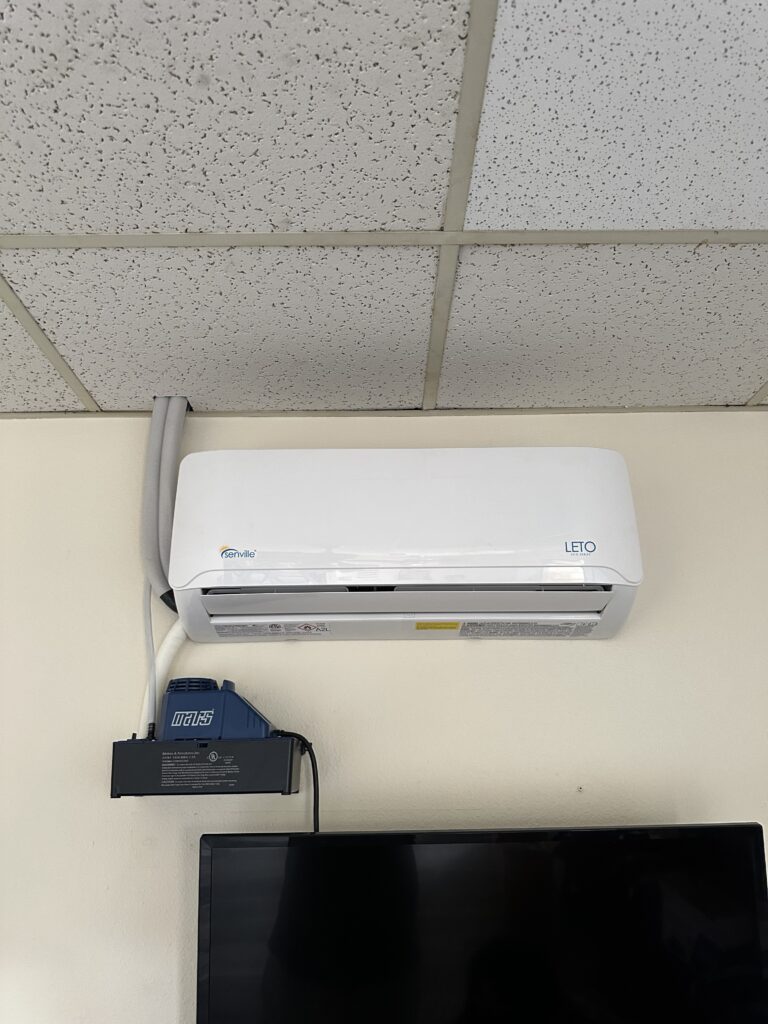
A ductless mini split is another powerful solution for cooling a hot upstairs, especially in homes where adding zoning to existing ductwork is not practical. Mini splits mount on the wall in individual rooms and deliver targeted cooling without needing any ductwork at all. They are highly efficient, quiet, and let you cool only the rooms you are using rather than the entire upper floor. A single mini split in a master bedroom can transform sleep quality during hot summer nights. Many homeowners install one or two mini splits as a supplement to their central system rather than as a full replacement. Looking for targeted upstairs cooling? Click here for our mini split service.
Insulation and Sealing Fix an Upstairs That Is Always Hotter Than Downstairs
Adding insulation to your attic is one of the highest-return improvements you can make for upstairs comfort and lower energy bills. Most homes built before recent code updates have insulation levels that fall well short of what is recommended for the Central Valley climate. Bringing your attic up to R-38 or higher dramatically slows the rate at which attic heat penetrates your upstairs ceilings. Blown-in cellulose or fiberglass is the most common upgrade and can usually be installed over your existing insulation. The job is typically completed in a single day and starts paying you back immediately through lower cooling costs. Homeowners often notice the upstairs feels measurably cooler within hours of the work being finished.
Air sealing the gaps around recessed lights, attic hatches, plumbing penetrations, and the top plates of interior walls is just as important as adding insulation. These small openings let conditioned air escape into your attic while pulling hot attic air down into your living space. A blower door test can identify exactly where your home is leaking the most air and guide a focused sealing effort. Sealing these gaps before adding more insulation makes the insulation work far more effectively. The combination of air sealing and insulation creates a true thermal barrier between your attic and your upstairs rooms. Most homes see noticeable comfort improvements after this kind of work is completed properly.
Window upgrades and shading also play a major role in keeping the upstairs cool during peak summer afternoons. West-facing and south-facing windows receive direct sunlight for hours every day, turning glass into a powerful heat source. Low-E windows, exterior shading, solar screens, and even quality blackout curtains can reduce solar heat gain significantly. Planting trees or installing awnings on the sunniest sides of the house provides long-term shade that protects your upstairs year after year. These improvements work hand in hand with insulation and air sealing to reduce the overall heat load on your second floor. The less heat that enters your home in the first place, the less your cooling system has to work to keep you comfortable.
Duct Improvements Fix an Upstairs That Is Always Hotter Than Downstairs
Sealing your existing ductwork is often the single biggest improvement you can make for upstairs cooling at a reasonable cost. A professional technician inspects every joint, connection, and seam in your duct system and applies mastic sealant or specialized tape to stop the leaks. In many homes, this single service recovers enough lost airflow to drop the upstairs temperature by several degrees almost overnight. The work usually takes a few hours and lasts for many years without further attention. Sealed ducts also improve indoor air quality by keeping attic dust, insulation fibers, and pests out of your air stream. The energy savings alone often pay for the service in just a few cooling seasons.
Resizing or adding ductwork on the second floor can permanently solve airflow problems that simple sealing cannot fix. If the original ducts feeding your upstairs are too small or too restrictive, no amount of sealing will deliver enough air to cool those rooms properly. A skilled HVAC contractor can perform a Manual D duct design calculation to determine the correct size and layout for balanced airflow. Sometimes the fix involves adding a larger supply trunk, sometimes it means splitting a single overworked duct into two, and sometimes it means installing a booster fan in a stubborn run. Each home is different, and the right solution depends on what the technician finds during a thorough inspection. Done correctly, this work transforms how a two-story home feels during the summer.
Adding return air vents to upstairs bedrooms is one of the most impactful and underappreciated duct improvements available. Without proper returns, supply air gets stuck in upstairs rooms with nowhere to go, which kills circulation and lets temperatures climb. New returns can be cut into ceilings or high walls and connected back to the main return trunk for proper airflow balance. In homes where new ductwork is difficult to run, transfer grilles or jump ducts above doorways provide a much cheaper alternative that still helps significantly. These upgrades make every other improvement work better because the system can finally move air the way it was designed to. Many homeowners are shocked at how much difference proper returns make on the second floor.
Why You Need Professional Help to Fix a Hot Upstairs
Fixing a hot upstairs the right way takes specialized tools, training, and experience that go beyond what most homeowners can do themselves. Load calculations, duct design, refrigerant charging, and zoning installation all require licensed expertise to be done safely and correctly. A trained HVAC technician can diagnose the root causes in your specific home rather than guessing at solutions that may or may not work. Professional service also protects your equipment warranty and ensures everything meets current California code requirements. Breezio AC has the experience, the tools, and the local knowledge to solve upstairs cooling problems for good.
Professional Diagnosis Solves a Hot Upstairs Problem
A professional HVAC technician brings calibrated instruments that reveal exactly what is happening inside your home and your cooling system. Anemometers measure airflow at every vent, manometers check static pressure across the system, and thermal cameras show heat patterns invisible to the eye. These tools tell a complete story about why your upstairs is hot and which fixes will give you the biggest return. Without this kind of diagnosis, homeowners often spend money on the wrong solutions and end up still uncomfortable. A proper assessment also catches related problems like refrigerant issues or failing components before they become emergencies.
Manual J load calculations are the industry standard for determining exactly how much cooling capacity each room in your home actually needs. This calculation accounts for square footage, window exposure, insulation levels, ceiling height, and dozens of other factors that affect comfort. A technician using Manual J can show you exactly why your upstairs is undercooled and what changes will balance the load properly. This same calculation guides equipment sizing, duct design, and zoning decisions to make sure everything works together. Skipping this step is the most common reason people remain uncomfortable even after spending money on upgrades.
Refrigerant levels, blower performance, evaporator coil cleanliness, and thermostat calibration all affect how well your system can cool the upstairs. A professional inspection checks every one of these items and identifies anything that is dragging down system performance. Even a small refrigerant undercharge can cut cooling capacity by a noticeable amount, which hits the upstairs hardest because it is the furthest from the air handler. Routine professional service catches these issues before they ruin your summer. Trained technicians know what to look for and how to fix it quickly the first time.
Long-Term Solutions Solve a Hot Upstairs Problem
Quick fixes feel good in the moment, but they rarely solve a hot upstairs problem in any lasting way. Professional installations and upgrades are designed to perform for ten, fifteen, or twenty years with proper maintenance. Investing in zoning, duct improvements, insulation upgrades, or a properly sized system pays you back every single summer through better comfort and lower bills. These are not temporary patches but permanent improvements that make your home more livable and more valuable. The right professional partner helps you prioritize which improvements to make first based on your budget and goals.
Equipment sizing matters enormously for two-story homes because an oversized unit cools too fast, shuts off, and never moves enough air to reach the upstairs properly. An undersized unit runs constantly without ever catching up to the heat load on the upper floor. Only a professional load calculation can determine the correct size for your specific home and layout. Replacing an aging system with a properly sized, high-efficiency model often solves long-standing upstairs comfort problems on its own. Pairing the right equipment with the right ductwork and controls gives you decades of reliable comfort.
Ongoing maintenance keeps every improvement working at peak performance for years after installation. Filters get changed, coils get cleaned, refrigerant gets checked, and small issues get caught before they grow into expensive repairs. A maintenance plan also extends the life of your equipment significantly, which protects your investment in the upgrades you have already made. Regular service is the difference between a system that works great for five years and one that works great for twenty. Reliable maintenance is the foundation of long-term comfort and efficiency.
Why Choose Breezio AC to Fix Your Hot Upstairs
Breezio AC brings over thirty years of hands-on HVAC experience to every job in Visalia, Tulare, Fresno, and the surrounding Central Valley communities. Our team understands the unique cooling challenges that local two-story homes face during long, hot summers. We are fully licensed and insured in California, and we treat every customer’s home with the same care we would give our own. Our 5-star service reputation has been built one satisfied homeowner at a time over decades of consistent work. When we say we will fix your upstairs comfort problem, we mean it.
Every installation we perform includes a two-year maintenance plan to make sure your new system or upgrade keeps performing at its best. We offer 24/7 emergency HVAC service because comfort problems do not wait for business hours, especially in the middle of a Valley summer. Our flexible financing options make major improvements accessible without forcing you to choose between comfort and your budget. We handle both residential and commercial HVAC work, so we bring deep expertise to every project regardless of size. Our team shows up on time, communicates clearly, and finishes the job right the first time.
Reaching us is simple, and we are ready to help solve your upstairs cooling problem today. Call Breezio AC at (559) 202-0224 or email support@breezioac.com to schedule a comfort assessment for your home. Our team will diagnose the real causes of your hot upstairs and walk you through the best solutions for your budget and goals. We are committed to honest pricing, quality workmanship, and reliable service on every single job. Let us show you why Central Valley homeowners trust Breezio AC for lasting comfort.