
What to Do When Your AC Freezes Up in Summer
Summer in Visalia pushes air conditioners harder than any other season, and a frozen AC unit ranks among the most common calls we receive between June and September. Ice forming on your evaporator coil or refrigerant lines means your system has stopped cooling properly, even though it keeps running and racking up energy costs. Spotting the problem early protects the compressor, which is the most expensive part of your AC to replace. Most homeowners notice weak airflow, warm air coming from the vents, or visible ice on the copper lines outside before the unit fully fails. Acting fast saves money and prevents a small issue from turning into a full system breakdown during a heat wave. This guide walks you through what causes the freeze, how to thaw it safely, and what to do next.
Why Your AC Freezes Up in Summer Heat
A frozen AC during summer almost always points to one of three root causes: restricted airflow, low refrigerant, or a mechanical failure inside the unit. The evaporator coil needs warm air constantly passing over it to absorb heat from your home; when that airflow drops, the coil temperature plunges below freezing and condensation turns to ice. Once ice forms, it blocks airflow even further, which creates a snowball effect that locks up the entire system. Understanding the underlying cause helps you fix the right problem instead of just thawing the ice and waiting for it to happen again. Many freeze-ups trace back to simple maintenance issues that homeowners can prevent with basic care throughout the cooling season.
Restricted Airflow Causing Your AC to Freeze Up in Summer
A dirty air filter is the number one reason an AC freezes up in summer, and it is also the easiest fix. When the filter clogs with dust, pet dander, and debris, it starves the evaporator coil of the warm return air it needs to function. The coil keeps absorbing heat from the small amount of air still passing through, but the surface temperature drops too low and condensation freezes on contact. Replacing the filter every 30 to 90 days during heavy summer use prevents this problem entirely. Homeowners with pets, allergies, or dusty environments around Visalia and Tulare County should check filters monthly during peak heat. A clean filter also reduces strain on your blower motor and lowers your monthly energy bill.
Blocked return vents and closed supply registers create the same airflow restriction as a dirty filter, just from a different angle. Furniture pushed against a return grille, rugs covering floor vents, or curtains draped over supply registers all reduce the volume of air moving through your system. Some homeowners close vents in unused rooms thinking it saves energy, but this actually increases static pressure inside the ductwork and can trigger a coil freeze. Every supply and return vent in your home should stay fully open and unobstructed during summer operation. Walk through each room and check that nothing blocks the airflow path. This simple habit keeps your system balanced and prevents pressure problems that lead to ice buildup.
Dirty evaporator coils and collapsed or leaky ductwork also choke airflow and cause freezing. Dust and biological growth accumulate on the coil fins over years of use, especially when filters have been neglected, and this coating insulates the coil and traps moisture against the metal. Damaged flex ducts, disconnected joints, or crushed sections in the attic reduce the cubic feet per minute reaching the air handler. If you have changed your filter and opened every vent but the unit still freezes, the problem likely sits inside the equipment or ductwork. Need help diagnosing airflow issues in your home? Click here for our air ducts service to get a professional inspection and cleaning.
Low Refrigerant Causing Your AC to Freeze Up in Summer
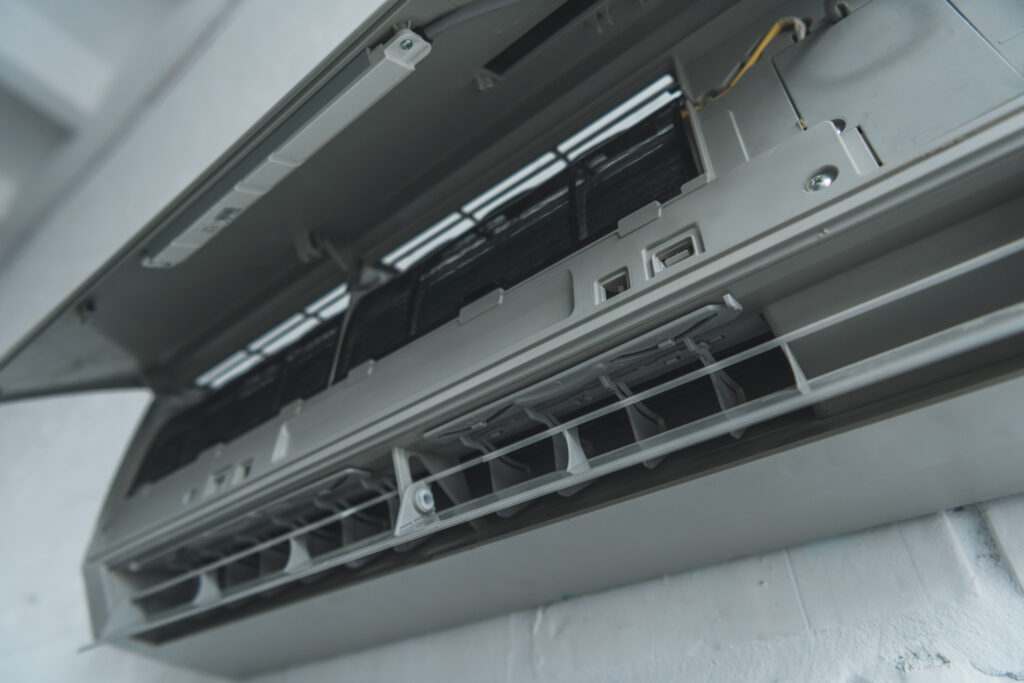
Low refrigerant charge drops the pressure inside the evaporator coil, which lowers the boiling point of the refrigerant and pulls the coil temperature below freezing. This happens even when airflow is perfect, because the physics of the refrigerant cycle depend on maintaining a specific pressure range. A system low on refrigerant did not lose it through normal use; refrigerant does not get consumed like fuel, so a low charge always means there is a leak somewhere in the system. Common leak points include the copper line set, the evaporator coil itself, the outdoor condenser coil, and the service valves. Topping off refrigerant without finding the leak is a temporary fix that wastes money and harms the environment.
Spotting low refrigerant before a full freeze-up saves the compressor from running under abnormal conditions, which shortens its lifespan dramatically. Warning signs include longer cooling cycles, hissing or bubbling sounds near the indoor unit, oily residue on copper lines, and a noticeable drop in cooling performance during the hottest part of the day. The outdoor unit may also short cycle, kicking on and off in rapid bursts as the low-pressure safety switch trips. California regulations require EPA-certified technicians to handle refrigerant, so this is not a homeowner repair. Attempting to add refrigerant without proper gauges and certification is illegal and dangerous.
Modern systems use R-410A or the newer R-454B refrigerants, and finding leaks requires electronic leak detectors, nitrogen pressure testing, or UV dye tracing. Once we locate the leak, we evacuate the system, repair the damaged component, pressure test the lines, pull a deep vacuum to remove moisture, and recharge to the manufacturer’s specifications by weight. Cutting corners on any of these steps leads to repeat failures and contaminated systems. If your AC keeps freezing and you suspect a refrigerant issue, click here for our air conditioning service to schedule a leak inspection and proper repair.
Mechanical Problems Causing Your AC to Freeze Up in Summer
A failing blower motor or a blower wheel coated in dust will not push enough air across the evaporator coil to keep it above freezing. Blower motors wear out over time, and capacitors that power them degrade with heat exposure, which is brutal in the Central Valley summer. A motor running at reduced speed looks like it is working, but the actual airflow falls well below the required cubic feet per minute. Older PSC motors fail more often than newer ECM variable-speed motors, though both eventually need service. Listening for unusual humming, grinding, or a blower that takes a long time to ramp up gives you early warning signs.
A stuck or failing expansion valve, also called a TXV or metering device, throws off the refrigerant flow into the evaporator coil and causes localized freezing. When the valve cannot modulate properly, too much liquid refrigerant floods the coil and flashes to vapor at the wrong location, creating a cold spot that ices over. This is a more advanced diagnosis that requires checking superheat and subcooling readings with manifold gauges. A clogged filter drier or restricted refrigerant line can produce similar symptoms. These repairs need a trained HVAC technician with the right tools and refrigerant recovery equipment.
Drainage problems also contribute to freeze-ups in an indirect way. When the condensate drain line clogs, water backs up into the drain pan and can short the safety float switch, but the bigger issue is that high humidity inside the air handler accelerates ice formation on an already-stressed coil. Algae growth, sludge, and debris block drain lines every summer, especially in attic-mounted air handlers common in Visalia homes. Flushing the drain line as part of annual maintenance prevents these cascading failures. A frozen coil that thaws can dump gallons of water into your ceiling or floor if the drain pan and line are not clear.
How to Safely Thaw Your Frozen AC Unit
Once you notice ice on your AC, the worst thing you can do is keep running the system in cool mode. The compressor pulls liquid refrigerant when the coil is frozen, and liquid refrigerant returning to the compressor causes catastrophic internal damage called slugging. Compressor replacement can run between $1,500 and $3,000 on a residential system, so protecting it is the top priority. Thawing the unit properly takes a few hours, but it sets you up for an accurate diagnosis when a technician arrives. Follow these steps in order and resist the urge to chip away ice or use heat sources to speed things up.
Steps to Thaw a Frozen AC Unit Safely
First, turn the thermostat to the OFF position to stop the cooling cycle entirely. Then switch the fan setting from AUTO to ON, which keeps the blower running and pushes room-temperature air across the frozen coil to melt the ice gradually. This method thaws the system faster than just shutting everything down, and it does so without using the refrigerant cycle. Place towels or a shallow pan under the indoor unit because melting ice produces significant water that the drain may not handle fast enough. Check the area every 30 minutes during the thaw, which typically takes one to three hours depending on how much ice has formed.
Never use a hair dryer, heat gun, hot water, or any other heat source to speed up the thaw. The copper coil fins are delicate aluminum that bends easily, and rapid temperature changes can crack the coil or damage the brazed joints. Chipping ice with a screwdriver or knife will puncture the coil and create a refrigerant leak that costs hundreds to repair. Patience matters here. While the unit thaws, check your air filter; if it is dirty, replace it now so the system has clean airflow when you restart it.
Once the ice has fully melted and you have inspected the copper line set for any remaining frost, you can attempt a test run. Set the thermostat to a normal cooling temperature and listen for the outdoor unit to engage. Within 10 to 15 minutes, you should feel cold air at the supply vents and the copper suction line should feel cool but not frosty. If ice starts forming again within an hour, shut the system down and call for service. Repeated freeze cycles damage the compressor and indicate a deeper problem that needs professional diagnosis.

When to Call a Professional for a Frozen AC Unit
If your AC freezes up again within 24 hours of thawing, the underlying cause needs immediate professional attention. DIY troubleshooting beyond filter changes and vent checks runs into safety, legal, and warranty issues quickly. Refrigerant work requires EPA Section 608 certification under federal law, and most manufacturer warranties become void when unlicensed work is performed on the sealed system. A certified technician brings manifold gauges, leak detectors, recovery machines, and the diagnostic experience to identify the real problem on the first visit. The cost of a service call almost always comes in lower than the cost of replacing a compressor damaged by a homeowner running a frozen system.
Visible signs that demand a service call include oil stains around copper line joints, persistent hissing sounds, water pooling around the indoor unit after a thaw, electrical burning smells, or breakers tripping when the AC starts. Any of these symptoms indicate active component failure that will get worse with continued operation. Heat waves in the Central Valley regularly push temperatures past 105 degrees, and a failed AC during these stretches creates real health risks for children, elderly residents, and pets. Calling early in the season for diagnosis beats waiting on hold during a July heat emergency.
Annual maintenance prevents the vast majority of freeze-ups before they happen. A spring tune-up includes coil cleaning, refrigerant pressure verification, capacitor testing, blower inspection, drain line flushing, and electrical connection tightening. These tasks address every common freeze cause in a single visit and typically pay for themselves through energy savings and avoided repairs. Want to schedule a professional inspection before your AC freezes again? Click here for our air conditioning service to book a summer maintenance appointment with our certified team.
Preventing Your AC From Freezing Up Again This Summer
Building a simple maintenance routine eliminates most freeze-up risks for the rest of the cooling season. Set a calendar reminder to check your air filter on the first of every month from May through October, and replace it whenever it looks gray or you cannot see light through it. Walk through your home each month to confirm that all supply and return vents stay open and clear of furniture, rugs, and curtains. Rinse the outdoor condenser coil with a garden hose every six to eight weeks to remove dust, grass clippings, and cottonwood fluff that block airflow through the fins. Trim back any plants or shrubs growing within two feet of the outdoor unit.
Keep an eye on your thermostat settings during extreme heat. Setting the temperature below 68 degrees on a 100-degree day forces the system to run continuously, which increases the risk of coil freezing when any other condition is even slightly off. A reasonable setpoint between 72 and 78 degrees during peak afternoon hours protects the equipment and still keeps the home comfortable. Programmable and smart thermostats let you raise the setpoint while you are at work and pre-cool the home before you return, which reduces total runtime. Lower runtime means less stress on every component and a longer system lifespan.
Schedule professional maintenance once a year, ideally in early spring before the first heat wave hits. A trained technician catches small problems like a weak capacitor, a slightly low refrigerant charge, or a partially clogged drain line before they cascade into a freeze-up or a full breakdown. Maintenance plans also typically include priority service, discounted repairs, and extended warranty coverage that pay for themselves over a few seasons. Documentation of regular maintenance protects manufacturer warranty claims if a major component fails. Treat your AC like you treat your car: regular service keeps it running reliably for 15 to 20 years instead of failing at year eight.
Why You Need Breezio AC to Handle Your Frozen AC This Summer
A frozen AC in the middle of a Visalia summer is not just an inconvenience; it is an urgent problem that puts your compressor, your wallet, and your family’s comfort at risk. Breezio AC has built its reputation on diagnosing the real cause of freeze-ups quickly and fixing them right the first time. Our technicians carry the certifications, tools, and experience to handle every cause from a clogged filter to a buried refrigerant leak. We serve homeowners and businesses across Visalia, Tulare, Fresno, Hanford, and the surrounding Central Valley communities. Calling us early in the season prevents the emergency call later.
Fast Response When Your AC Freezes Up in Summer
When your AC freezes up during a 105-degree afternoon, waiting days for service is not an option. Breezio AC offers 24/7 emergency HVAC service because we know that comfort and safety cannot wait until business hours. Our trucks stay stocked with the most common parts, refrigerants, and tools so most repairs get completed during the first visit. We arrive when we say we will arrive, and we explain the diagnosis in plain language before any work begins. No surprise charges and no upselling.
Our service area covers all of Tulare and Kings County along with much of Fresno County. From Porterville to Reedley, Selma to Lemoore, and every community in between, we keep response times short by running multiple service trucks across the region. Local dispatch means a technician can often reach you the same day you call. Familiarity with the local climate and housing stock helps us diagnose issues faster than out-of-area contractors. We know what 110-degree heat does to a Central Valley AC system.
Same-day service for frozen AC calls is standard during summer months, and we prioritize emergencies involving households with elderly residents, infants, or medical needs. Our dispatch team will walk you through safe thawing steps over the phone while a technician heads your way. Honest communication and reliable arrival times have built our reputation across the Valley. Five-star reviews come from doing the basics right every single visit. That is the standard we hold ourselves to.
Expert Diagnosis of Why Your AC Freezes Up in Summer
Diagnosing a frozen AC properly means checking every possible cause, not just guessing at the most common one. Our technicians follow a complete diagnostic process that covers airflow, refrigerant charge, electrical components, drainage, and mechanical condition. We use manifold gauges, electronic leak detectors, anemometers, and digital multimeters on every service call. This thorough approach catches problems that surface-level inspections miss. You get a real fix instead of a temporary patch.
With over 30 years of hands-on HVAC experience behind our team, we have seen every variation of freeze-up that Central Valley summers can produce. Older R-22 systems, modern R-410A units, mini-splits, heat pumps, and commercial rooftop equipment all freeze for different reasons, and we know the patterns. Experience also means we recognize when a freeze-up signals a system that has reached the end of its service life and when it points to a simple repair. Honest assessments protect your budget. We never push replacement when a repair makes sense.
Our diagnostic reports come with photos, measurements, and clear explanations of what we found and what we recommend. Homeowners deserve to understand their HVAC system, not just receive a bill. We take the time to show you the dirty coil, the leaking valve, or the failed capacitor before we replace it. This transparency builds the trust that keeps customers calling us year after year. Education is part of every service call we run.
Why Choose Breezio AC for Your Frozen AC Repair
Breezio AC is licensed and insured throughout California, with technicians trained to current EPA, code, and manufacturer standards. Every install we complete includes a two-year maintenance plan at no extra cost, which protects your investment and keeps freeze-ups from coming back. Flexible financing options put major repairs and new installations within reach for any household budget. We work on residential and commercial systems with the same attention to detail. The job gets done right or we make it right.
Our team commits to five-star service on every call, and the reviews from Visalia, Tulare, Hanford, and Fresno customers reflect that standard. We answer the phone, show up on time, communicate clearly, and stand behind our work. Two-year maintenance coverage on new installs means we keep showing up to make sure everything runs as promised. Trust gets earned through follow-through, and that is how we built our business. The Central Valley deserves an HVAC company that treats every customer like a neighbor.
Ready to fix that frozen AC and get your home comfortable again? Call Breezio AC at (559) 202-0224 or email support@breezioac.com to schedule your service. We are located at 7730 W Sunnyview Ave #5 in Visalia and serve the entire surrounding region with same-day and emergency appointments. Click here for our air conditioning service to book online or learn more about our full range of cooling repairs. Summer does not slow down, and neither do we.