
Why Your Furnace Smells Funny When You First Turn It On
The first cool morning in the Central Valley almost always plays out the same way in every house. You push the thermostat over to heat for the first time since spring, the burners light, and within a minute or two the air coming out of the vents smells like something is scorching somewhere inside the wall. Most homeowners in Visalia notice it around late October or early November, and the reaction is usually the same mix of confusion and mild alarm. The good news is that the most common furnace startup smell is completely harmless and clears itself within an hour or two of runtime. The complicated news is that several other smells share that same first cycle timing, and a few of them signal a real safety problem that needs a technician on site the same day. Learning to separate the harmless smells from the serious ones takes about ten minutes of reading and it can save you a repair bill, an emergency call, or something far worse. This guide breaks down every odor a residential furnace can produce on startup, explains the mechanical reason behind each one, and tells you how long each smell should reasonably last before it stops being normal. By the end you will know exactly which smells you can ignore and which ones mean you should shut the system down and pick up the phone.
What Causes a Furnace Smell When You First Turn It On
A furnace sitting idle from April through November collects a remarkable amount of material inside the cabinet, and Tulare County adds agricultural dust and valley haze on top of what a normal house produces. When the burners finally light, every surface inside that cabinet climbs to operating temperature very quickly, and anything resting on those surfaces reacts to the heat. That reaction is what you smell coming out of the supply registers during the first few cycles of the season. The blower then pushes that odor through the entire duct system and distributes it to every room in the house at once, which makes a small amount of burning dust seem far more dramatic than it actually is. Different materials produce different smells, and the material involved tells you almost everything about how concerned you should be. Dust and lint smell dry and slightly acrid. Mold and moisture smell damp and sour. Overheating wire insulation smells sharp and chemical, and that last category is the one that deserves your full attention.
The Dust Burn Off Smell When You First Turn On Your Furnace
The dust burn off smell is by far the most common reason a furnace smells funny when you first turn it on, and it accounts for the overwhelming majority of calls our office takes in the first two weeks of heating season. During the long Visalia cooling season your furnace blower runs constantly to move conditioned air, but the heat exchanger and burner assembly sit completely cold and untouched for roughly seven or eight months. Fine dust settles onto the exterior of the heat exchanger, across the burner ports, along the inducer housing, and on every horizontal surface inside the cabinet. When the burners finally fire, the metal surfaces of the heat exchanger climb into the several hundred degree range within a couple of minutes. The dust resting on that hot metal oxidizes and produces a dry, slightly scorched odor that the blower immediately carries into your living space. It smells alarming because your brain correctly associates burning with danger, but the actual quantity of material involved is tiny. This is the same basic process that makes a space heater or a toaster oven smell strange the first time you use it after storage.
The timing of this smell follows a very predictable pattern that helps confirm what you are dealing with. It shows up within the first sixty to ninety seconds after the burners light, it peaks during the first full heating cycle, and it fades noticeably with each subsequent cycle over the next several hours. By the second or third day of regular heating use, it should be gone entirely and it should not return until the following fall. A brand new furnace behaves in a similar way for a slightly different reason, since manufacturing oils, protective coatings, and cutting fluids left on the metal from the factory burn off during the first several hours of operation. Installers usually warn homeowners about this, but it still catches people by surprise on the first genuinely cold night. Running the system for two or three hours with a few windows cracked open speeds the process along considerably. Turning on your bathroom and kitchen exhaust fans during that first run helps pull the odor out of the house faster.
There is one important qualifier on the dust burn off explanation, and it comes down to duration. A dust smell that persists past the first full day of operation is no longer a dust smell, because there simply is not enough dust in a residential furnace cabinet to burn continuously for that long. If you are still catching that scorched odor on day three, something else is producing it and the system deserves a look from a technician. The same applies if the smell disappears for a few weeks and then returns in the middle of January, since seasonal dust does not accumulate again once the system is cycling regularly. Homeowners who skipped their filter change in the spring often see a stronger and longer lasting version of this smell, because a loaded filter allows more debris past into the blower compartment and onto the heat exchanger. Replacing the filter before that first startup makes a real difference in both the intensity and the duration of the odor. Need your furnace looked at before the cold sets in? Click here for our furnace service.
Musty and Moldy Furnace Smells When You First Turn On the Heat
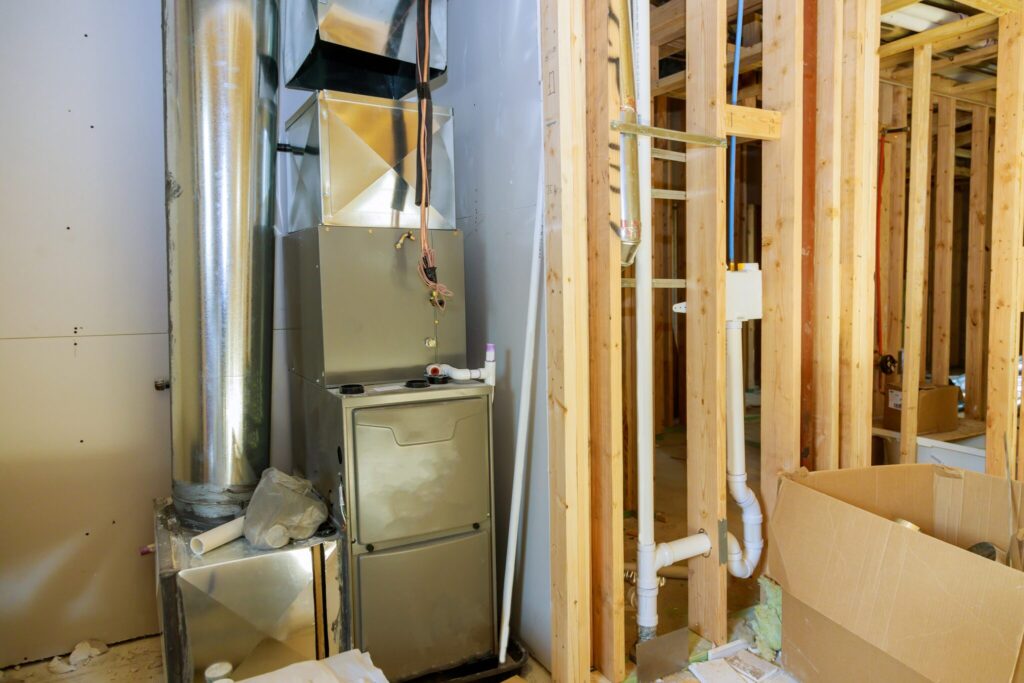
A damp, sour, basement style odor on startup points somewhere entirely different than a dry scorched smell, and it usually has nothing to do with the furnace itself. Musty smells almost always originate in the duct system rather than inside the equipment cabinet. Over a long cooling season your evaporator coil produces condensate continuously, and any moisture that escapes the drain pan into the supply plenum or the first few feet of duct creates an environment where mold and bacteria establish themselves easily. That growth sits dormant and mostly odorless while the system moves cool dry air across it. The moment warm air passes over the same surfaces, the material becomes active and volatile, and the smell releases into the airstream and travels straight into your rooms. This is why homeowners often report that the house smelled fine all summer and only turned musty when the heat came on.
Duct related odors can also come from sources that have nothing to do with mold at all. Rodents frequently nest inside return ducts, crawlspace duct runs, and attic plenums during the cooler months, and the results are unpleasant in a very distinctive way. Loose or disconnected return duct sections pull unconditioned air directly from a crawlspace, an attic, or a wall cavity, and that air brings every odor in those spaces along with it. Older flex duct with damaged outer jacketing collects moisture inside the insulation layer, and once that insulation stays wet it holds a persistent musty smell that no amount of runtime clears up. A saturated or forgotten air filter contributes its own sour note, especially if the filter got damp at any point during the season. Each of these problems produces a smell that stays constant rather than fading, which is the clearest signal that you are not dealing with simple dust burn off. Duct problems also cost you money every month by leaking conditioned air into spaces you are not trying to heat.
Solving a musty furnace smell means addressing the duct system rather than the furnace, and that starts with a real inspection of the accessible runs. A technician checks the drain pan and condensate line for standing water, examines the evaporator coil for biological growth, and looks at the plenum connections and the first several feet of supply and return duct for moisture damage. Disconnected sections get resealed, damaged flex duct gets replaced, and the interior surfaces get cleaned where cleaning makes sense. Improving airflow through the system reduces the humidity that allows growth to establish itself in the first place, which means correctly sized ductwork and a clean filter both work as preventive measures. Homeowners with recurring musty odors often benefit from moving to a thicker media filter with a higher capture rate, since more of the organic material gets caught before it reaches the coil. If your vents smell damp every time the heat kicks on, the ducts are telling you something. Click here for our air duct services.
Electrical and Burning Plastic Furnace Smells When You First Turn It On
An electrical smell is sharp, chemical, and distinctly different from the dry scorched smell of burning dust, and most people recognize the difference immediately once they know to listen for it. This odor comes from overheating wire insulation, an overheating motor winding, or a component running well outside its designed temperature range. A blower motor with worn bearings draws more current than it should and runs progressively hotter as the bearings degrade further. A failing run capacitor causes the motor to labor, which produces heat in the windings and a characteristic hot electrical smell. Frayed or rodent damaged wiring inside the cabinet arcs against metal surfaces and scorches its own insulation. A seized inducer motor produces the same result. None of these situations resolve themselves and all of them get worse with continued runtime.
Burning plastic is its own category and it deserves an immediate shutdown. Sometimes the source is genuinely trivial, like a plastic bag, a child’s toy, or a piece of packaging that fell into a floor register and landed against a warm duct surface. Just as often the source is a component inside the equipment, such as a melting wire loom, a cracked plastic inducer housing, or a control board with a scorched trace. The difficulty is that you cannot tell those two situations apart from the hallway, and one of them is a fire risk. The correct response is to switch the system off at the thermostat, cut power at the disconnect or the breaker, and let the equipment cool before anyone investigates. A quick look into accessible floor registers with a flashlight rules out the simple explanation in about five minutes. If the registers are clear, the source is inside the equipment and it needs a technician.
A hot metal or overheated smell without any electrical sharpness usually traces back to restricted airflow, and this is one of the most preventable problems in residential heating. When a furnace cannot move enough air across the heat exchanger, the exchanger temperature climbs past its design range and the limit switch shuts the burners down. Homeowners experience this as short cycling combined with a hot metallic odor, and the system eventually stops producing heat altogether. The usual culprits are a completely loaded filter, closed or blocked supply registers, furniture placed over floor vents, a crushed section of flex duct, or a blocked return grille. Repeated overheating cycles put real stress on the heat exchanger and shorten its usable life considerably. Checking your filter and walking the house to confirm every register is open costs you ten minutes and prevents a service call. A thermostat that is misreading temperature can create a similar overheating pattern, and our thermostat service covers that side of the system.
Which Furnace Smells Are Dangerous and Which Ones Are Normal
Sorting furnace smells into safe and unsafe categories comes down to three questions that anyone can answer without tools. What does the smell actually resemble, how long has it been present, and does it get stronger or weaker as the system runs. Dry and scorched, fading over a few hours, on the first cold day of the season is the normal pattern and it needs nothing from you beyond a filter change. Sulfur, smoke, or burning plastic is the abnormal pattern and it needs the system shut down immediately. Musty and persistent lands in the middle, since it is not an emergency but it does mean something in your duct system needs correction. The reason this distinction matters so much is that gas fired equipment produces carbon monoxide as a normal byproduct of combustion, and a properly functioning furnace vents all of it safely outside through the flue. Problems with the heat exchanger, the flue, or the combustion process can allow that gas into the living space, and carbon monoxide has no smell at all. The odors described below are the warning signs that accompany those failures, and they are the only warning your nose will ever give you.
Normal Furnace Smells That Fade After You First Turn It On
The normal category is short and easy to define, which makes it useful as a baseline. Dry dust burning off the heat exchanger during the first few cycles of the season is normal, and it fades within a few hours of cumulative runtime. Factory oils and coatings burning off a newly installed furnace are normal, and they clear within the first day of operation. A faint warm smell during the first minute of each cycle in the coldest part of winter is normal on many older systems and reflects nothing more than dust that settled during a long idle period between calls for heat. All three of these share a defining trait, which is that the intensity decreases over time rather than staying flat or building. That downward trend is your confirmation that the source is finite and burning itself away.
Managing a normal burn off smell is mostly about ventilation and patience. Open two or three windows on opposite sides of the house to create some cross flow, run your bathroom and kitchen exhaust fans, and let the furnace operate through several complete cycles rather than shutting it off after five minutes. Turning the system off at the first hint of odor actually prolongs the process, since the dust never fully burns away and you repeat the same experience the next time you call for heat. Replacing the air filter before that first startup reduces the amount of material available to burn and improves airflow across the heat exchanger at the same time. A one inch filter should be replaced every one to three months depending on dust load and pets, and thicker media filters generally run six months to a year. Central Valley homes with heavy outdoor dust usually need the shorter end of those ranges.
Setting expectations correctly protects you from two opposite mistakes. The first mistake is panicking over a completely ordinary dust smell and shutting off the heat during a cold snap, which leaves the house uncomfortable for no reason. The second and far more serious mistake is dismissing a genuinely dangerous smell as ordinary dust because someone once said furnace smells are normal. The timeline is your best tool for telling them apart, since ordinary dust cannot produce a smell that lasts for days and it cannot produce sulfur, smoke, or melting plastic. Any odor that persists past the first day, or any odor that falls outside the dry scorched description, has moved out of the normal category entirely. When you are uncertain, treating it as abnormal costs you an inspection fee and treating it as normal can cost you a great deal more.

Dangerous Furnace Smells That Mean You Should Turn It Off Right Away
A rotten egg or sulfur smell is the single most urgent odor a furnace can produce and it requires immediate action rather than investigation. Natural gas has no natural odor, so utilities add a sulfur compound called mercaptan specifically so that leaks become detectable by smell. If you notice that smell anywhere near your furnace, your gas water heater, or your gas meter, get everyone out of the house first. Do not flip light switches, do not use your phone indoors, do not light anything, and do not attempt to find the source yourself. Once you are outside and away from the building, call your gas utility and then call for service. Gas leaks are handled by the utility first because they control the supply, and a technician addresses the equipment side afterward. This is the one furnace smell where speed genuinely matters more than diagnosis.
A smoky smell, or the smell of combustion byproducts inside the living space, points toward a flue or venting problem and it is equally serious. Furnace flues run to the roof or through a sidewall, and birds, rodents, and debris block them regularly during the months the system sits unused. When the flue cannot vent properly, combustion gases back draft into the equipment cabinet and from there into the house. Those gases include carbon monoxide, which you cannot smell, cannot see, and cannot detect without a working alarm. The smoky odor is a byproduct of the same failure, and it functions as your only sensory warning that venting has stopped working correctly. Shut the system down, ventilate the house, and get a technician on site before running the furnace again.
Burning plastic, hot electrical smells, and any odor accompanied by visible smoke all warrant an immediate shutdown at the breaker rather than just the thermostat. Melting insulation and arcing wiring are fire hazards and the risk increases with every additional minute of runtime. There is also a set of symptoms worth knowing that has nothing to do with smell at all, because carbon monoxide exposure produces headache, dizziness, nausea, and unusual fatigue that improve when you leave the house and return when you come back inside. Those symptoms in more than one person in the same household are a reason to go outside and call for help regardless of what your nose is telling you. Every home with gas appliances needs working carbon monoxide alarms on each level and near sleeping areas, and the batteries should be checked at the same time you change your clocks. Alarms are inexpensive and they cover the failure mode your senses cannot detect. Breezio AC offers 24/7 emergency service across the Visalia area for exactly these situations.
How a Furnace Inspection Tells Normal Smells From Dangerous Ones
A technician diagnosing a furnace smell works through the system in a specific order rather than guessing, and the process is more thorough than most homeowners expect. The inspection starts with the burner assembly and the flame pattern, since flame behavior reveals a great deal about combustion quality. A healthy burner produces a steady blue flame that holds position when the blower engages. Yellow, orange, or lazy flames indicate incomplete combustion, which means the burners are dirty, the gas pressure is off, or the combustion air supply is restricted. Flames that flutter, lift, or roll out of the burner box when the blower starts suggest a breach in the heat exchanger, and that finding changes the entire conversation. Each of these conditions produces its own odor signature, so the visual inspection and the smell you reported line up into a single answer.
The heat exchanger receives the closest attention because it is the barrier between combustion gases and the air you breathe. Technicians inspect accessible surfaces visually, use a borescope camera to examine areas the eye cannot reach, and check for cracks, rust perforation, warping, and soot deposits. Combustion analysis measures the actual gas content in the flue stream and confirms that the equipment is burning cleanly and venting properly. Draft testing verifies that the flue is pulling as designed and that nothing has taken up residence in the vent pipe. Carbon monoxide readings are taken both in the flue and in the living space to confirm nothing is spilling into the house. A cracked heat exchanger means the furnace comes out of service until it is repaired or replaced, and there is no safe middle ground on that call.
The electrical and airflow side of the inspection catches the remaining causes. Wiring gets checked for damage, discoloration, and loose connections that generate heat under load. Capacitors get tested against their rated values, since a weak capacitor makes the blower motor run hot long before the motor fails outright. Motor amperage draw gets measured and compared to the nameplate rating, and bearing condition gets evaluated by feel and by sound. Static pressure readings across the system reveal restricted ductwork, undersized returns, and filter problems that cause overheating. Drain lines, drain pans, and the evaporator coil get checked for the standing water that produces musty odors. By the end of the visit, the technician can tell you precisely what produced the smell, what it will take to fix, and how urgent the repair actually is.
Why You Need a Furnace Inspection Before You Turn On the Heat This Fall
Early fall is the right time to have your furnace inspected, and the reason is entirely practical. The system has been idle for months, nobody knows what condition it is in, and the first cold night is when every problem announces itself at once. Scheduling an inspection in September or October means you find those problems on a mild afternoon with parts readily available rather than on a cold evening when the house is dropping into the fifties. It also means the dust burn off happens on your schedule, with the windows open and nobody worried about what the smell means. A furnace that gets checked before the season starts runs more efficiently, costs less to operate, and lasts longer than one that gets run until it breaks. Breezio AC serves Visalia, Tulare, Hanford, Porterville, Dinuba, Fresno, and the surrounding communities, and fall inspection appointments fill up quickly once the weather turns.
What a Fall Furnace Inspection Covers Before You Turn On the Heat
A complete fall furnace inspection covers combustion, airflow, electrical, and controls as a single connected system rather than a checklist of unrelated parts. Burners get cleaned and inspected, the flame sensor gets serviced, and the ignition system gets tested through several complete cycles. The heat exchanger gets examined for cracks and corrosion, and combustion gases get analyzed to confirm the furnace is burning and venting correctly. Blower components get cleaned and lubricated where applicable, and motor amperage and capacitor values get measured against specification. Safety controls including the limit switch, the pressure switch, and the rollout switch get tested to confirm they will actually shut the system down when they need to.
The airflow portion of the inspection often produces the most immediate improvement in comfort. Filters get replaced, return grilles get checked for blockage, and static pressure gets measured to identify restrictions in the duct system. Accessible duct runs get inspected for disconnections, crushed sections, and damaged insulation that waste energy and create odor problems. Supply registers get verified as open and unobstructed throughout the house. Homes with uneven temperatures from room to room usually have an airflow cause behind that symptom, and the inspection is where it gets identified.
Controls and safety devices round out the visit and they matter more than their small size suggests. Thermostat calibration gets verified so the furnace responds to actual room temperature rather than a reading that drifted over the summer. Gas pressure gets checked at the manifold and adjusted to manufacturer specification. Condensate drains on high efficiency equipment get cleared, since a blocked drain shuts the system down on a pressure switch fault. Carbon monoxide levels get measured in the living space as a final confirmation that everything is venting where it should. Ready to get ahead of the heating season? Click here to schedule furnace service with Breezio AC.
What It Costs to Ignore a Furnace Smell Before the Heating Season
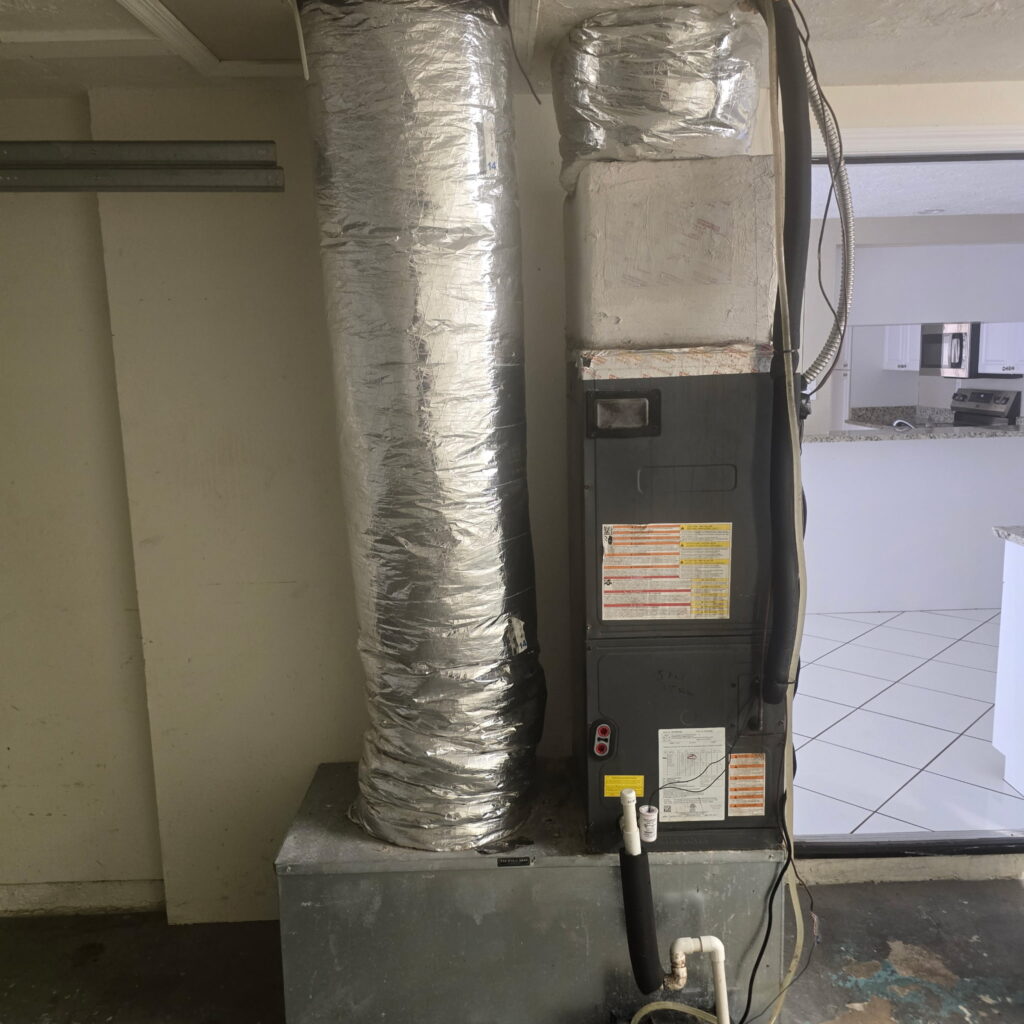
Ignoring a furnace smell rarely stays cheap, because the underlying problems tend to progress rather than stabilize. A blower motor with failing bearings that smells hot in October usually fails completely in January, and it takes the capacitor and sometimes the control board with it. A partially blocked flue that produces a faint smoky odor becomes a fully blocked flue after the next storm. A small heat exchanger crack widens with every thermal cycle. Each of these situations costs meaningfully more to address after the failure than before it, and the emergency premium on a cold weekend adds to the bill.
There is an efficiency cost that shows up on your utility statement every month as well. Dirty burners, restricted airflow, and incorrect gas pressure all force the system to run longer to reach the same setpoint. Leaking or disconnected ductwork dumps heated air into attics and crawlspaces where it does you no good at all. Homeowners frequently discover that a single inspection and correction knocks a noticeable amount off their winter heating costs. Those savings compound across the full season and continue in the years that follow.
The comfort and safety costs are harder to put a number on but they are just as real. Losing heat during a cold snap means a house full of uncomfortable people and a scramble to find an available technician. Running a furnace with a compromised heat exchanger or a blocked flue puts your household at risk from a gas you cannot detect without an alarm. Neither of those outcomes is acceptable when a scheduled inspection prevents both. The cost of finding out early is always lower than the cost of finding out late.
Why Choose Breezio AC for Furnace Service in Visalia and the Central Valley
Breezio AC brings more than thirty years of hands on HVAC experience to every furnace call we take, and that experience shows up in the diagnosis rather than the guesswork. We are licensed and insured in California, and we handle both residential and commercial systems across Visalia, Tulare, Hanford, Fresno, Porterville, Dinuba, Exeter, Lindsay, and the surrounding communities. Our technicians show up when they say they will, explain what they found in language that makes sense, and give you the options before any work begins. We offer 24/7 emergency service, because gas smells and no heat calls do not wait for business hours.
Every system we install includes a two year maintenance plan, which keeps your equipment inspected and serviced through the seasons that matter most. Flexible financing is available for repairs and replacements, so a failed heat exchanger in December does not have to become a financial emergency. We service furnaces, heat pumps, ductless systems, thermostats, and complete duct systems, which means one company handles your comfort from end to end. That continuity matters when a problem crosses between the equipment and the ductwork.
We built this company on doing the job correctly the first time and standing behind the result, and our 5 star reviews reflect that commitment. If your furnace smells funny when you first turn it on this fall, we will tell you honestly if it is ordinary dust burning off or something that needs immediate attention. There is no upsell attached to that answer. Call Breezio AC at (559) 202-0224, email support@breezioac.com, or stop by our office at 7730 W Sunnyview Ave #5 in Visalia. We are ready to get your heat working safely before the first cold night arrives.