
Why Older Homes in Visalia Struggle With Cooling
The tree lined streets of Visalia are home to some of the most beautiful architecture in the Central Valley. From the charming bungalows near downtown to the sprawling ranch style homes built in the mid century era, these properties possess a character that new construction simply cannot replicate. Owning a piece of local history comes with a sense of pride and a unique connection to the past. However, that connection often feels a little too warm when July and August roll around. Residents of these classic homes frequently find themselves fighting a losing battle against the summer heat. You might set the thermostat to seventy five but the indoor temperature hovers near eighty until the sun goes down.
This struggle is not a reflection of your personal maintenance habits. It is a fundamental conflict between modern comfort expectations and historical building standards. The way we built homes fifty or eighty years ago was dictated by different technologies and cheaper energy costs. Air conditioning was often a luxury or an afterthought rather than a central design element. Understanding why your older home fights you every summer is the first step toward winning the war on heat. Breezio AC & Heating specializes in retrofitting these vintage treasures with modern cooling solutions. We believe you should be able to enjoy the aesthetic of the past without sacrificing the comfort of the present.
The Missing Thermal Barrier
The most significant factor working against your comfort in an older home is the insulation or the lack thereof. Building codes in the 1950s and 1960s had very different requirements compared to today. Many homes in Visalia were built with minimal insulation in the attic and absolutely zero insulation in the exterior walls. The concept of a thermal envelope was not fully developed or prioritized. This means that the heat from the relentless Central Valley sun radiates directly through your roof and walls into your living space.
Attic insulation in older homes has often settled or degraded over the decades. What might have been three inches of fiberglass in 1970 is now a thin, dusty layer that offers almost no resistance to heat transfer. The attic becomes a superheated oven during the day, reaching temperatures well over one hundred and forty degrees. This heat presses down on your ceiling and radiates into your bedrooms long after the sun has set. Your air conditioner is fighting a constant influx of heat from above that a newer home simply does not experience.
Wall insulation presents an even trickier challenge. Most older homes were framed with two by four studs and then covered with lath and plaster or exterior siding with nothing in the cavities. This construction method creates a direct bridge for heat to travel from the outside stucco to your interior drywall. You can feel this heat if you place your hand on a west facing wall in the late afternoon. It feels warm to the touch because the wall itself has become a thermal battery, storing heat and releasing it into your home. Your cooling system has to work double time to remove this heat that is constantly bleeding through the structure.
The Curse of Leaky and Undersized Ducts
The ductwork system is the respiratory system of your home, and in older houses, this system is often compromised. Metal ductwork was the standard for many years, but the methods used to seal the joints were primitive by modern standards. Tape dries out and fails, and mastic was rarely used. Over time, the natural shifting of the house causes joints to separate. We often find older duct systems that are leaking thirty percent or more of the conditioned air into the attic or crawlspace. You are paying to cool the squirrels in your attic while your family sweats in the living room.
Design standards for airflow have also evolved significantly. In the past, it was common to install a single central return vent for the entire house. This design works adequately if you leave all the interior doors open, but that is not how most people live today. When you close a bedroom door, you pressurize the room and starve the system of air. The air conditioner cannot pull the warm air out of the room, so it cannot replace it with cool air. The room becomes stagnant and uncomfortable because the airflow is effectively choked off.
Materials used in older duct systems can also be a source of trouble. Some mid century homes utilize underground ducts or ducts made of materials that have since collapsed or disintegrated. Crushed ducts restrict the volume of air that can reach your vents. It is like trying to breathe through a straw while running a marathon. Your modern air conditioner might have plenty of power, but it cannot deliver that cooling capacity if the delivery system is strangled.
Single Pane Windows and Solar Gain
Windows are the eyes of the home, but in older properties, they are also massive holes in your thermal defense. The classic single pane glass found in historic Visalia homes offers virtually zero insulation value. It provides a direct path for solar radiation to enter your home and heat up your furniture and floors. This is known as solar gain, and it accounts for a huge portion of your cooling load.
The glass itself is only part of the problem. The frames of older windows are often made of wood or aluminum that has warped or deteriorated over time. This creates gaps and cracks around the sash where hot outdoor air can infiltrate. You might not see these gaps, but you can certainly feel the draft if you stand near the window on a hot, windy day. Your home is essentially leaking cool air out and sucking hot air in through these hundreds of tiny openings.
Modern windows utilize double or triple panes with inert gas fills and Low-E coatings to reflect heat. Older windows lack all of these technologies. They allow the full spectrum of UV and infrared light to penetrate your home. This not only heats up the room but also fades your carpets and drapes. While replacing windows is a major project, understanding their role in your comfort issues helps you realize why your AC seems to run non stop without ever catching up.
Inadequate Electrical Infrastructure
We rarely think about our electrical panel when we think about staying cool, but the two are inextricably linked. Older homes in Visalia were often built with 60 or 100 amp electrical services. This was plenty of power when the average home had a refrigerator, a few lights, and a radio. It is woefully inadequate for the modern home filled with computers, large appliances, and high capacity air conditioning systems.
Installing a modern central air conditioner often requires a dedicated circuit with significant amperage capacity. Older homes may not have the room in the panel to accommodate a new system. This often leads to homeowners installing undersized window units or hoping that their old, inefficient central unit keeps running one more year. The electrical limitations can prevent you from installing the powerful, efficient cooling equipment that your home actually needs to combat the valley heat.
Voltage drops and fluctuations are also more common in older wiring systems. Motors, like the compressor in your AC, are very sensitive to voltage supply. If the wiring in your home is undersized or corroded, the voltage can dip when the unit tries to start. This causes the motor to overheat and wear out prematurely. You might find yourself replacing capacitors and compressors frequently because your home’s electrical infrastructure is slowly killing your HVAC equipment.
The Challenge of Retrofitting Central Air
Many historic homes in Visalia were built before central air conditioning was even invented. They relied on whole house fans, swamp coolers, or simply opening the windows at night to stay cool. These homes were not designed with space for ductwork or large air handlers. When central air was added later, it was often shoehorned into spaces that were never meant to hold it.
We frequently see air handlers shoved into hot attics with almost no clearance for maintenance. We see ductwork that is twisted and turned in impossible configurations to fit around structural beams. These compromised installations reduce the efficiency and effectiveness of the system. The unit has to work harder to push air through the tortured duct path, leading to higher energy bills and reduced lifespan for the equipment.
In two story homes, the challenge is even greater. There is often no chase or pathway to get ductwork from the basement or attic to the first floor ceiling or second floor floor. This results in soffits being built to hide ducts, which lowers ceiling heights and ruins the aesthetic of the room. Or worse, the system is designed to only cool the upstairs, leaving the downstairs dependent on gravity to pull cool air down, which rarely works effectively.
Modern Solutions for Vintage Problems
The situation is not hopeless. In fact, technology has advanced to the point where we can cool older homes more effectively than ever before without destroying their character. One of the most popular solutions for older homes in Visalia is the ductless mini split system. These units do not require any ductwork at all. They consist of a small outdoor compressor and quiet indoor heads mounted high on the wall or recessed into the ceiling.
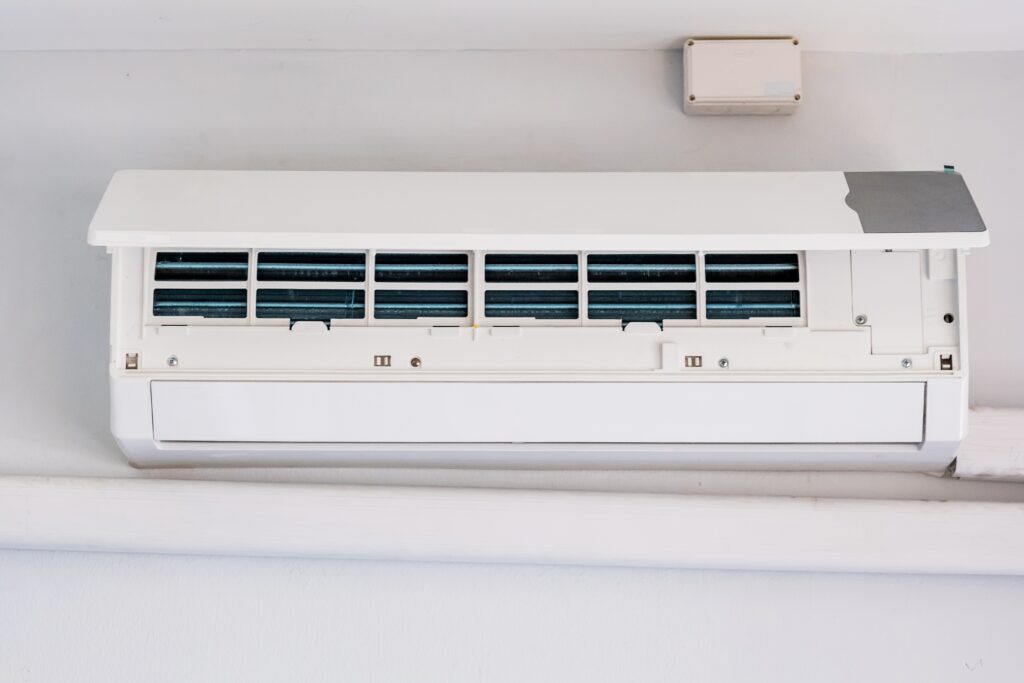
Mini splits allow you to bring powerful cooling to rooms that have never been comfortable before. You can install them in a master bedroom or a sunroom without having to tear open walls to run ducts. They are also incredibly efficient, using inverter technology to modulate their speed and use only the energy necessary to maintain the temperature. This is a game changer for homes with limited electrical capacity, as they often draw less power than traditional central units.
For homes where central air is preferred, high velocity systems are another option. These systems use small, flexible ducts that can be snaked through existing wall cavities and around obstacles without major renovation. The air is delivered at a higher speed, which creates a mixing effect that cools the room evenly and eliminates hot spots. This allows you to keep your high ceilings and original plaster work while enjoying modern comfort.
The Role of Smart Thermostats and Zoning
Even if you keep your existing central system, upgrading the controls can make a massive difference in an older home. Smart thermostats can learn the unique thermal properties of your house. They understand that your home heats up quickly in the afternoon and takes a long time to cool down. They can start the cooling cycle earlier to pre cool the house before the heat of the day sets in, preventing the system from falling behind.
Zoning systems can also be retrofitted into some existing ductwork. This involves installing motorized dampers that direct air only to the rooms that need it. If your upstairs gets hot but your downstairs stays cool, a zoning system can force more cold air to the second floor. This balances the temperature throughout the home and fixes the uneven cooling issues that plague so many two story vintage properties.
These intelligent controls give you the ability to manage the deficiencies of an older home proactively. You stop reacting to the heat and start managing it. By combining smart controls with other improvements like attic fans or strategic shade, you can significantly reduce the load on your air conditioner and improve your overall comfort.
Owning an older home in Visalia is a labor of love, but you do not have to suffer for it. The struggle to keep these properties cool is real, but it is not insurmountable. It stems from a combination of outdated building practices, missing insulation, and aging infrastructure that simply was not designed for our modern climate reality. Recognizing these structural limitations is the first step toward fixing them. You cannot treat a 1950s rancher the same way you treat a 2020 tract home. It requires a tailored approach that respects the integrity of the structure while introducing 21st century technology.
Breezio AC & Heating has deep experience working with the unique architecture of the Central Valley. We understand the nuances of lath and plaster walls, tight attics, and limited electrical panels. We offer a range of solutions from insulation upgrades and duct sealing to high tech mini split installations. We can help you bridge the gap between the charm of the past and the comfort of the present. Do not let another summer pass where you dread the afternoon heat. Contact us today to evaluate your older home and develop a plan to make it the cool, comfortable sanctuary it deserves to be.