
Why Mini Splits Are Ideal for Garages and Additions
Garages and room additions present a comfort problem that most central HVAC systems were never built to solve. Your existing furnace and air conditioner were sized for the original footprint of your home, and stretching that capacity into a detached garage or a new bonus room rarely works the way homeowners hope. A mini split gives you a focused, efficient way to heat and cool these spaces without tearing into walls to run new ductwork. The system pairs a compact outdoor unit with one or more indoor air handlers, and the two connect through a slim line set that needs only a three inch hole in the wall. Because there are no ducts, you avoid the energy losses that plague traditional forced air setups. You also gain independent temperature control for the exact space you want comfortable, so you are not paying to condition rooms nobody is using. For Visalia homeowners dealing with triple digit summer heat and chilly winter mornings, that level of control matters a great deal. This guide explains why a mini split is the smart choice for garages and additions, and what a proper installation should look like.
How a Mini Split Cools and Heats a Garage Without Ductwork
A garage is one of the hardest spaces in any home to keep comfortable, and the reason comes down to how it was built. Most garages have little to no insulation, a large uninsulated door, and a concrete slab that pulls heat out in winter and traps it in summer. Running ductwork from your central system into that space is expensive, and it often robs the rest of the house of airflow. A mini split sidesteps all of that by working as a self contained system built for one zone. It delivers conditioned air directly into the garage through a wall mounted or ceiling mounted indoor unit. The outdoor compressor handles the heavy lifting outside, so you keep your garage floor clear and the space quiet inside. That combination is exactly why so many homeowners turn to ductless technology for this part of the house.
Why a Mini Split Works So Well in a Detached or Attached Garage
A mini split works well in a garage because it treats that space as its own independent zone with its own thermostat and its own dedicated equipment. Your central system was sized using a load calculation based on the living areas of your home, and a garage was almost never part of that math. When you try to push central air into a garage, you stretch the system past its design limit and often create uneven temperatures everywhere else. A ductless mini split removes that conflict entirely. The indoor head mounts on the garage wall, the outdoor unit sits just outside, and a slim line set connects the two. You control the garage temperature without touching the settings for the rest of the house. For an attached garage that shares a wall with living space, this also stops unconditioned air from leaking into your home. That isolation keeps both areas more comfortable and far more efficient.
Detached garages benefit even more from a mini split, since running ducts to a separate structure is rarely practical or affordable. Trenching ductwork underground or routing it overhead introduces long runs where conditioned air loses temperature before it ever arrives. A mini split avoids that problem because refrigerant lines carry energy far more efficiently than ducted air over the same distance. You can place the outdoor unit beside the detached garage and run the line set straight through the wall. The result is fast heating and cooling with very little energy wasted along the way. Hobbyists who use their garage as a workshop, a gym, or a studio finally get a space they can actually use in July and in January. The quiet operation of an inverter compressor means you can work, lift, or build without the constant roar of a window unit. That reliability is what turns a garage from dead space into usable square footage.
The flexibility of mini split equipment is another reason it fits garages so naturally. Indoor units come in wall mounted, ceiling cassette, and floor mounted styles, so you can choose the option that fits your garage layout and storage needs. A wall mounted head keeps the unit up and out of the way of shelving, tool benches, and parked vehicles. The systems also come in a range of capacities, measured in BTUs, so a professional can match the equipment to the size and insulation level of your specific garage. A single zone system handles one garage perfectly, while a multi zone system can cover a garage plus a connected workshop or bonus area. Modern units include features like dehumidification, programmable schedules, and remote control through an app. Because the technology both heats and cools, you get one piece of equipment that covers summer and winter alike. Learn more about how these systems are configured on our mini split service page, where we break down the options for your home.
How a Mini Split Handles Garage Temperature Swings Year Round
A garage experiences wider temperature swings than almost any other part of your property, and a mini split is built to manage that swing. In summer, a closed garage in the Central Valley can climb well past the outdoor air temperature because the slab and walls absorb and radiate heat all day. In winter, that same concrete slab pulls warmth out of the air and leaves the space cold and damp. A mini split uses heat pump technology to move heat in both directions, so the single system cools the garage in July and warms it in December. The inverter compressor adjusts its output continuously instead of slamming on and off. That steady modulation holds the garage at your target temperature far more precisely than older single speed equipment. You feel fewer hot and cold spots, and the system uses less energy to maintain comfort. The end result is a garage that stays usable across every season.
Humidity control is part of how a mini split tames those temperature swings, and it matters more than most homeowners realize. Warm air holds more moisture, and a hot garage often feels sticky and stale long before the temperature itself becomes the main complaint. As the mini split cools, it also pulls moisture out of the air and drains it away through the condensate line. That dehumidification protects stored items, tools, and equipment from rust and mildew. A drier garage feels cooler at the same temperature, which lets you run the system at a comfortable setting without overcooling. In the cooler months, steady heat keeps condensation from forming on cold surfaces and bare metal. Controlling both temperature and moisture is something a simple space heater or window unit cannot do well. That dual action is a core reason ductless systems outperform the cheaper alternatives.
Proper sizing is what allows a mini split to handle garage temperature swings without struggling or wasting energy. An undersized unit will run constantly and still fail to reach your target on the hottest afternoons. An oversized unit cools too fast, shuts off, and short cycles, which wears out components and leaves humidity behind. A trained technician calculates the load based on your garage dimensions, ceiling height, insulation, door type, and sun exposure. That calculation points to the correct BTU capacity for your specific situation. Insulating the garage door and walls before installation lowers the required capacity and improves the result even further. When the equipment is matched to the space, the system holds a steady temperature with minimal effort. That balance of accurate sizing and smart installation is what separates a comfortable garage from a frustrating one.
What a Mini Split Installation Looks Like in a Typical Garage
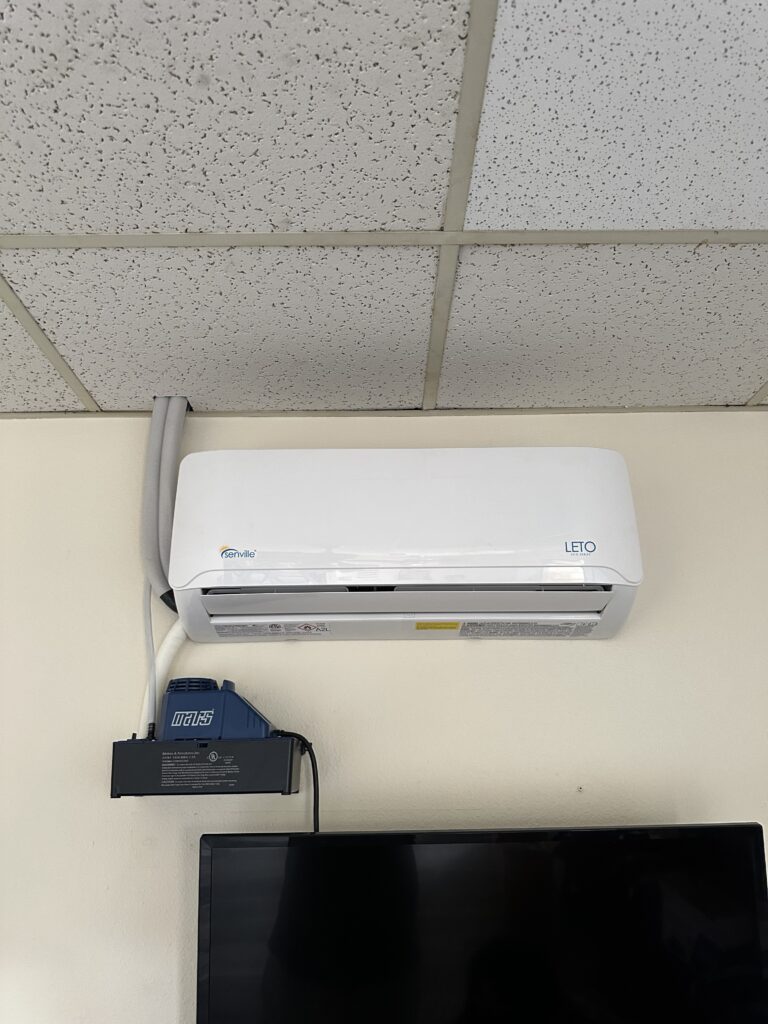
A mini split installation in a garage is far less invasive than most homeowners expect. The technician mounts the indoor air handler high on an interior wall, usually near the ceiling where the conditioned air spreads evenly across the space. A small hole, generally around three inches wide, is drilled through the exterior wall to pass the line set outside. That line set bundles the refrigerant lines, the power and control wiring, and the condensate drain into one neat conduit. The outdoor condenser sits on a pad or a wall bracket close to the indoor unit to keep the refrigerant run short. Most single zone garage installations are completed in less than a day. There is no demolition, no ceiling tear out, and no weeks of construction. You get a clean, finished system with very little disruption to your routine.
Electrical work is an important part of a proper mini split installation, and it should always be handled by a qualified professional. The outdoor unit needs a dedicated circuit sized to the equipment, and that circuit must meet California electrical code. A licensed installer confirms your existing panel can support the new load before any work begins. The connection between the indoor and outdoor units carries low voltage control signals that coordinate the system. Refrigerant lines must be vacuumed and charged precisely, since too much or too little refrigerant hurts performance and shortens equipment life. The condensate drain has to slope correctly so water flows away from the structure instead of pooling. These steps are exactly where do it yourself kits and untrained installers run into trouble. A professional installation protects both your investment and your warranty.
The location of each component shapes how well your garage mini split performs over the years. The outdoor unit needs clear airflow around it, so it should not be crammed against a fence, buried in shrubs, or tucked into a tight corner. The indoor head needs an unobstructed path to push air across the room, away from shelving and stored gear. Placement also affects noise, drainage, and how easy the system is to service later. A thoughtful installer plans the layout before drilling a single hole, accounting for sun exposure and prevailing wind. That planning pays off in quieter operation and lower energy bills over the life of the equipment. Getting the details right from the start is the difference between a system that lasts and one that disappoints.
Why Mini Splits Are the Best Choice for Room Additions and Bonus Spaces
Room additions, converted attics, sunrooms, and ADUs create the same problem as garages; your existing HVAC system was never designed to cover them. When you add square footage, you add heating and cooling load that your original furnace and air conditioner may not be able to absorb. Tapping into the existing ductwork often weakens airflow throughout the rest of the home and disappoints everyone. A mini split solves this by adding dedicated capacity exactly where the new space needs it. The system runs independently, so the new addition gets its own comfort without stealing from the main house. You also avoid the cost and mess of extending ducts through finished walls and ceilings. For a growing family or a new home office, that focused comfort makes the addition immediately livable.
How a Mini Split Cools and Heats a New Room Addition
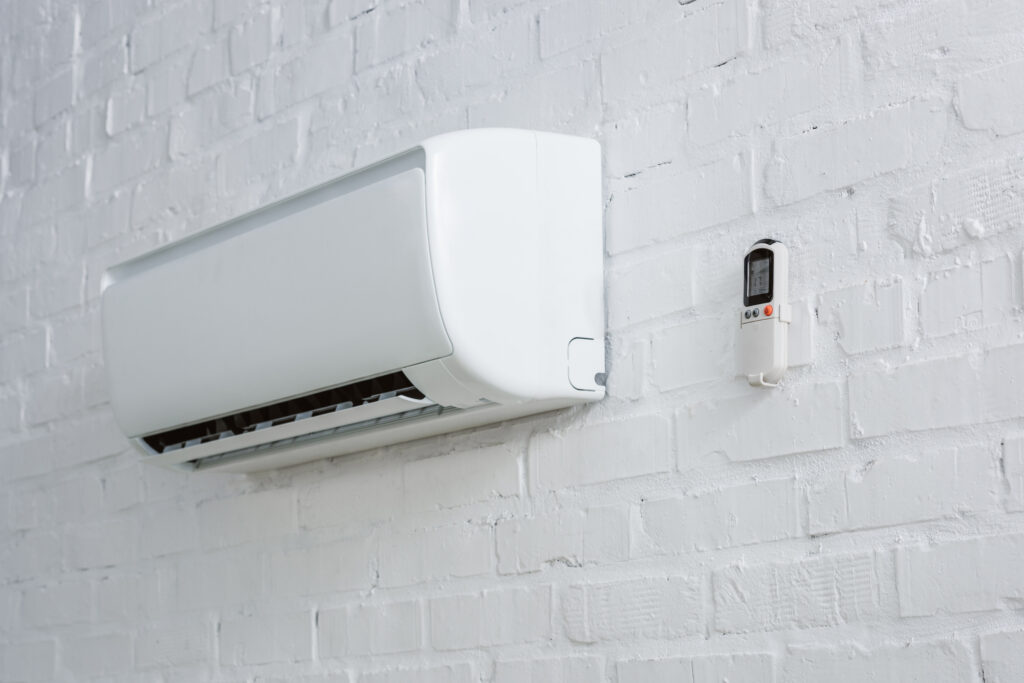
A mini split cools and heats a new room addition by acting as a complete, standalone climate system for that single space. When a contractor frames a new room, the heating and cooling load of the home changes, and the original equipment rarely has the spare capacity to keep up. Rather than upsizing your entire central system, a mini split adds precise capacity right where you built. The indoor unit conditions the addition directly, while the outdoor unit handles the work outside. Because the system is independent, the new room can be warmer or cooler than the rest of the house based on how it is used. A sunroom that bakes in the afternoon can run cooler, and a north facing office can run warmer. This zoning gives you comfort tailored to the room instead of a compromise across the whole home. The addition feels like a natural part of the house from the day you move in.
The efficiency of a mini split is a major advantage when conditioning a new room addition. Ductless systems avoid the energy losses that occur when conditioned air travels through long duct runs, especially ducts routed through hot attics or unconditioned crawlspaces. Industry studies have long shown that duct losses can waste a significant portion of the energy a system produces. A mini split delivers conditioned air straight into the room with none of that travel loss. Inverter driven compressors run at variable speeds, ramping down to a low hum once the room hits temperature instead of cycling off completely. That steady, low output uses far less electricity than repeated hard starts. High efficiency ratings on modern units translate directly into lower monthly bills for the new space. Over the life of the addition, those savings add up to a meaningful return.
Comfort in a new room addition depends on matching the mini split to the way the space will be used. A bedroom addition needs quiet operation for sleep, and ductless indoor units are among the quietest equipment available. A home gym needs strong cooling capacity to offset body heat and exertion. A home office benefits from precise temperature control and the ability to set schedules around your work hours. A professional sizes the unit based on the room dimensions, window area, insulation, and orientation, so the equipment fits the real demand. You can explore single zone options for one addition or multi zone systems if you are conditioning several new spaces at once. Curious how a ductless system compares to traditional cooling? See our air conditioning service options to weigh the right fit. The goal is always comfort that matches the room and the people who use it.
Why a Mini Split Beats Extending Your Existing Ductwork to an Addition
Extending your existing ductwork to a new addition sounds simple, but it usually creates more problems than it solves, which is why a mini split is the better path. Your duct system was designed and balanced for a specific number of rooms and a specific total airflow. Adding a new branch pulls air away from existing registers, so rooms that were once comfortable suddenly feel weak. The furnace and air conditioner also have a fixed capacity, and spreading that capacity across more square footage lowers performance everywhere. Long new duct runs to reach a distant addition lose temperature and pressure along the way. You can end up spending a lot of money and still have an addition that never quite gets comfortable. A mini split avoids every one of these compromises by adding its own dedicated capacity.
Cost and disruption are two more reasons a mini split beats extending ductwork into an addition. Running new ducts through finished walls, floors, and ceilings often means opening drywall, working around framing, and patching and repainting afterward. That labor adds up quickly, and the work can stretch across many days. A mini split installation needs only a small penetration through one wall and a short refrigerant line run. The job is typically finished in a fraction of the time with almost no cosmetic repair required. You spend less on labor and avoid the headache of living through a construction project. The cleaner process is one of the biggest practical advantages of going ductless for an addition.
Long term efficiency seals the case for a mini split over extended ductwork in an addition. Every joint, seam, and turn in a duct system is a potential spot for air to leak and energy to escape. New ducts running through an unconditioned attic or crawlspace are exposed to extreme temperatures that work against your system all year. A mini split keeps the energy transfer inside sealed refrigerant lines, which lose far less along the way. The independent system also lets you shut off conditioning to the addition when it is empty, instead of paying to push air there constantly. That kind of zoned control is simply not possible with a single shared duct system. Choosing ductless protects your comfort and your utility budget for as long as you own the home.
How Mini Split Zoning Improves Comfort in an Addition or Converted Space
Zoning is one of the most valuable features a mini split brings to an addition or a converted space. Each indoor unit operates as its own zone with its own thermostat, so every area gets exactly the temperature it needs. A converted attic that traps heat can run cooler than the rooms below it. A bonus room over a garage that always felt cold can finally hold steady warmth. This independent control eliminates the constant battle over a single central thermostat that never satisfies everyone in the house. The people in the new space set their own comfort without affecting the main living areas. That freedom is a daily quality of life improvement that homeowners notice right away.
A multi zone mini split takes that comfort even further when you are conditioning more than one new space. One outdoor unit can connect to several indoor heads, each controlling a different room. You might cover a new bedroom, a connected bathroom, and a home office all from a single compressor outside. Every head runs on its own schedule and its own setting, so unused rooms are not wasting energy. This setup keeps your exterior footprint small while delivering room by room control inside. It is an efficient way to bring an entire addition or a finished basement under reliable climate control. Multi zone flexibility is a major reason ductless systems fit complex remodels so well.
Zoned comfort also protects the things you keep in a converted or added space. A wine room, a media room, or a server closet each has different temperature and humidity needs, and a dedicated zone meets them precisely. Sensitive electronics, instruments, and stored goods all last longer in stable conditions. The mini split holds that stability without forcing the rest of the house to match. You gain the ability to treat each space according to its real purpose rather than a single household average. This is the kind of tailored performance that central systems struggle to deliver. For additions that serve a specific function, zoning turns a rough space into a purpose built room.
Why You Need Professional Mini Split Installation for Your Garage or Addition
A mini split delivers its full value only when it is installed correctly by trained professionals. The equipment itself is excellent, but performance, efficiency, and lifespan all depend on accurate sizing, careful refrigerant handling, and code compliant electrical work. A rushed or amateur installation can leave you with weak cooling, high bills, and early breakdowns. Breezio AC brings more than thirty years of hands on HVAC experience to every garage and addition project in the Visalia area. We size the system to your space, install it cleanly, and stand behind the work. The result is comfort that lasts and a system that earns its place in your home.
How Professional Mini Split Sizing Protects Your Garage or Addition
Professional mini split sizing is the foundation of a system that performs the way you expect. We calculate the heating and cooling load using the real characteristics of your garage or addition, including square footage, ceiling height, insulation, windows, and sun exposure. That calculation tells us the exact BTU capacity your space needs, with no guessing involved. An accurately sized unit holds a steady temperature, runs efficiently, and avoids the wear that comes from short cycling. Skipping this step is the most common reason a ductless system underperforms. Getting the math right at the start saves you money and frustration for years.
Correct sizing also protects the humidity control that makes a mini split so comfortable. An oversized unit cools the air too quickly, shuts off before it removes enough moisture, and leaves the space feeling damp. A properly sized system runs long enough to dehumidify while it cools, which keeps your garage or addition dry and fresh. That balance matters in the Central Valley, where summer heat and stored belongings make moisture a real concern. We size every system to manage both temperature and humidity together. The payoff is a space that feels genuinely comfortable, not merely cooler.
Beyond comfort, accurate sizing extends the life of your equipment and protects your warranty. A system that runs within its designed range puts far less stress on the compressor and other key parts. Frequent short cycling, by contrast, is one of the fastest ways to wear a unit out prematurely. Our load calculations make sure your mini split operates in its efficient sweet spot from day one. Need a mini split sized and installed the right way? Click here for our mini split service. Proper sizing is an investment that pays back in reliability and lower bills.

Why Proper Mini Split Installation Prevents Costly Repairs
Proper mini split installation is the best protection against the costly repairs that plague poorly installed systems. Refrigerant must be charged to the exact specification, since an incorrect charge strains the compressor and drags down efficiency. The line set has to be vacuumed to remove air and moisture before the system is charged, a step amateurs frequently skip. Skipping it lets moisture sit inside the lines, which leads to corrosion, ice, and eventual failure. Our technicians follow the manufacturer process precisely on every job. That discipline keeps small mistakes from becoming expensive breakdowns later.
The electrical side of a mini split installation is another place where shortcuts lead to repairs and hazards. The outdoor unit requires a dedicated, properly sized circuit that meets California code, not a shared or undersized connection. Loose connections, wrong breaker sizes, and improper grounding can damage the equipment and create safety risks. We verify your electrical panel can handle the load and install the circuit correctly the first time. This protects both your new system and your home. Doing the electrical work right prevents the nuisance trips and component damage that come from cutting corners.
Condensate management and mounting are small details that cause big repair bills when handled carelessly. The condensate drain must slope so water flows away from the building rather than pooling against the structure or backing up inside the unit. The indoor and outdoor units must be mounted securely on surfaces that can carry their weight and dampen vibration. Poor mounting leads to noise, stress on the line set, and premature wear. We install every component to last, with attention to the details that protect your investment. Careful installation today is what keeps your repair calls rare for years to come.
Why Choose Breezio AC for Your Garage and Addition Mini Split Installation
Breezio AC brings more than thirty years of hands on HVAC experience to every mini split installation in Visalia and across the Central Valley. We are licensed and insured in California, and we treat each garage and addition project with the same care we would give our own homes. Our team sizes your system accurately, installs it cleanly, and explains exactly how to get the most out of it. We serve homeowners and businesses throughout the area, from Visalia to Tulare, Hanford, Porterville, and beyond. When you call us, you reach people who know the local climate and the equipment that handles it best. That experience shows up in every comfortable garage and addition we leave behind.
We back our work with service plans and support that protect your investment well past installation day. Every install includes a two year maintenance plan, so your system gets the care it needs to run efficiently from the start. We offer 24/7 emergency HVAC service, which means help is available when you need it most. Flexible financing options make it easier to add comfort to your garage or addition without straining your budget. We handle both residential and commercial projects, so we have the range to fit your needs. Our goal is a long relationship built on reliable, five star service.
Choosing Breezio AC means choosing a company that takes pride in doing the job right the first time. We do not cut corners on sizing, refrigerant, electrical work, or installation quality, because those shortcuts cost you later. Our reputation in the Visalia area is built on honest work and comfortable results. Ready to add efficient heating and cooling to your garage or addition? Call us at (559) 202-0224 or email support@breezioac.com to schedule your mini split consultation. We are here to make your space comfortable in every season.