
How to Improve Indoor Air Quality Before Flu Season
Flu season in the Central Valley usually builds through late fall and peaks in the winter months, and the timing lines up almost perfectly with the point in the year when Visalia homeowners close their windows and start running the heat. Indoor air quality drops fast once a house is sealed up, because the same air keeps circulating through the return, across the coil, and back out the supply registers without any meaningful exchange with outside air. Dust, pet dander, cooking grease, and airborne viral particles all get recycled along that loop, and a dirty filter or a leaky duct run makes the problem worse rather than better. September is the right month to address this, since you still have mild weather and time to schedule work before the first real cold snap forces the furnace on for the season. Improving indoor air quality before flu season is not about buying one gadget; it involves filtration, humidity control, ventilation, and clean ductwork working together. The good news is that most of these improvements are affordable, and several of them pay for themselves in lower energy bills and fewer heating repairs. This guide walks through what actually moves the needle on indoor air quality, what to skip, and how to get your system ready before the weather turns.
What Indoor Air Quality Means for Flu Season in Your Home
Indoor air quality refers to the measurable condition of the air inside your home, including particulate levels, humidity, ventilation rate, and the presence of contaminants like volatile organic compounds. During flu season these factors matter more than usual because respiratory viruses spread through both large droplets and smaller aerosol particles that can stay suspended in still indoor air for extended periods. Homes in Visalia and the surrounding valley tend to be tightly built and heavily conditioned, which is excellent for energy efficiency but limits natural air exchange. When outdoor air infiltration drops, the concentration of everything already inside the house climbs steadily throughout the day. Your HVAC system is the single largest air handling device in the home, and it either helps or hurts depending on how it is configured and maintained. Getting the filtration, humidity, and duct condition right before October gives your family a meaningful advantage through the entire heating season.
How Filtration Improves Indoor Air Quality Before Flu Season
Filtration is the first and most effective lever you have, and it starts with the filter that sits in your return. Filters are rated on the MERV scale, which runs from 1 to 16 in residential applications, and the rating tells you how effectively the media captures particles in specific size ranges. A basic MERV 1 to 4 fiberglass filter exists mainly to protect the blower motor and the coil from large debris, and it does almost nothing for the fine particles that carry respiratory viruses. Moving up to a MERV 8 pleated filter captures a much broader range of dust, mold spores, and pet dander, and a MERV 11 to 13 filter begins to capture the smaller aerosol particles in the one to three micron range where viral transmission becomes relevant. The trade-off is static pressure, because denser media restricts airflow, and a residential system designed around a low-restriction filter can struggle when you jump several MERV levels at once. That restriction shows up as reduced airflow across the heat exchanger, longer run times, and in severe cases a furnace that trips its high limit switch and short cycles all winter.
The practical answer for most Visalia homes is a MERV 11 pleated filter in a standard one inch slot, or a MERV 13 filter if your system has a four or five inch media cabinet with adequate face area. Thicker filters are the better path when you want higher filtration without the airflow penalty, because the pleat surface area is dramatically larger and the pressure drop across the media stays reasonable. If your system currently uses a one inch filter and you want serious filtration, converting the return to accept a four inch media cabinet is a straightforward retrofit that most technicians can complete in a single visit. Filter change frequency matters just as much as the rating itself, because a loaded filter restricts airflow far more than a clean one regardless of what the label says. One inch pleated filters generally need replacement every 60 to 90 days, and four inch media filters typically last six to twelve months depending on household conditions. Homes with pets, smokers, or nearby agricultural dust should shorten those intervals considerably, and the valley has plenty of agricultural dust to go around.
There are also add-on filtration options that go beyond the return filter, and some of them are genuinely useful during flu season. Whole-home electronic air cleaners and high-efficiency media cabinets both increase particle capture without the airflow penalty of stuffing a dense filter into an undersized slot. Ultraviolet germicidal lamps installed at the evaporator coil are effective at keeping biological growth off the coil and drain pan surfaces, which prevents the musty odor and mold spore release that many homeowners notice when the system runs. It is worth being accurate about what UV does and does not accomplish; a coil-mounted lamp primarily treats the surfaces it illuminates rather than sterilizing air passing through at high velocity. In-duct UV systems designed for air treatment need adequate lamp intensity and dwell time to have a measurable effect, and they work best as a supplement to good filtration rather than a replacement for it. Portable HEPA units in bedrooms are also a reasonable addition during peak flu weeks, since they provide localized filtration in the rooms where people spend the most continuous hours.
How Humidity Control Improves Indoor Air Quality Before Flu Season
Humidity is the second major factor, and it is the one most homeowners overlook entirely. Research on airborne virus survival consistently points to a relative humidity range of roughly 40 to 60 percent as the zone where transmission risk drops. Below 30 percent, respiratory droplets evaporate faster and the remaining particles stay airborne longer, while your nasal passages and airways dry out and lose some of their natural ability to trap and clear pathogens. Above 60 percent, you start creating conditions favorable to mold growth and dust mite populations, which brings a different set of air quality problems. Central Valley winters bring cool nights and dry indoor conditions once the furnace starts running, and heating air without adding moisture drops relative humidity substantially. Many Visalia homes sit in the 20 to 30 percent range during a cold week in January, which is drier than most people realize.
The fix is a whole-home humidifier installed on the supply or bypass side of the furnace, and there are a few designs worth understanding. Bypass humidifiers route a portion of supply air across a wetted evaporative pad and back into the return, using the pressure differential across the furnace to drive flow. Fan-powered humidifiers include their own blower and mount directly to the supply plenum, delivering more capacity in a smaller footprint and working well in systems where a bypass duct is impractical. Steam humidifiers generate moisture independently of the furnace and can run even when the system is not calling for heat, which gives the most precise control at the highest equipment and operating cost. For most single-family homes in this area, a fan-powered or bypass unit paired with an outdoor temperature sensing humidistat handles the job well. The humidistat matters because target humidity needs to drop as outdoor temperature drops, otherwise you get condensation forming on windows and inside wall cavities.
Sizing and maintenance both affect whether the humidifier actually helps. A unit sized too small for the square footage will run constantly without moving the needle, and one sized too large without proper controls creates condensation problems. Evaporative pads need annual replacement, and the water panel in a bypass or fan-powered unit accumulates mineral scale quickly in areas with hard water, which describes most of Tulare and Fresno counties. The solenoid valve, drain line, and distribution tray all need a check before each heating season, and a clogged drain will overflow into the plenum if it is ignored. If you already have a humidifier installed, having it serviced alongside your fall furnace tune-up is the efficient way to handle it. Need your heating system checked before the cold arrives? Click here for our furnace service.
How Ventilation Improves Indoor Air Quality Before Flu Season
Ventilation is the third piece, and it addresses the concentration problem that filtration and humidity control cannot fully solve. Filtration removes particles from recirculated air, but it does nothing about carbon dioxide buildup, volatile organic compounds off-gassing from furniture and cleaning products, or the general staleness that accumulates in a sealed house. Ventilation dilutes indoor contaminants with outdoor air, and it is the reason a house feels noticeably fresher after windows have been open for an hour. The challenge in winter is that opening windows dumps conditioned air outside and drives up your heating bill, which is why mechanical ventilation exists as a controlled alternative. Modern construction standards recognize this, and newer homes often include some form of dedicated ventilation as a code requirement. Older Visalia homes generally rely on infiltration through the building envelope, which is unpredictable and drops off entirely on calm days.
An energy recovery ventilator, commonly called an ERV, brings in measured outdoor air while exhausting an equal volume of stale indoor air, passing both streams through a heat exchanger core that transfers energy between them. A heat recovery ventilator, or HRV, does the same thing but transfers only sensible heat rather than both heat and moisture. In the Central Valley climate, an ERV is usually the better choice because it retains some indoor humidity during dry winter conditions and limits humidity gain during humid periods. These units are typically ducted to the return side of the air handler or run on independent duct runs, and they operate on a schedule or in response to a control that monitors occupancy and indoor conditions. Installation cost varies with duct complexity, but the operating cost is modest since the recovery core reclaims a large share of the energy that would otherwise be lost.
Simpler ventilation improvements are worth doing even if a full ERV is not in the budget this year. Bathroom exhaust fans should actually vent to the exterior rather than into the attic, and they should be sized appropriately for the room and run long enough to clear moisture after showers. Kitchen range hoods that recirculate through a charcoal filter do not remove combustion byproducts or moisture from the home, and a ducted hood that exhausts outside is a real air quality upgrade. Commercial kitchens have entirely different requirements, and grease accumulation in hood systems creates both fire risk and air quality problems that require professional cleaning on a regular schedule. Running your HVAC blower in continuous fan mode rather than auto also helps by keeping air moving through the filter between heating cycles, and most modern variable speed blowers do this at very low energy cost. Operating a commercial kitchen? Click here for our kitchen hood cleaning service.
What to Inspect and Service Before Flu Season Arrives
Improving indoor air quality before flu season involves more than adding equipment, because the existing system has to be clean and functioning correctly for any upgrade to deliver its rated performance. A high-MERV filter installed on a system with disconnected duct joints and a dirty blower wheel will underperform badly. Fall is the natural window for this work, since the cooling season has just ended and the heating season has not started, which means your system can be down for a few hours without anyone being uncomfortable. A thorough pre-season service addresses the components that directly affect air quality along with the safety and efficiency items that matter for heating performance. Most homeowners find that the same visit resolves several issues they had been living with without realizing it. Scheduling in September or early October also means shorter wait times before the first cold snap fills every HVAC company’s schedule in the valley.
Duct Condition and Indoor Air Quality Before Flu Season
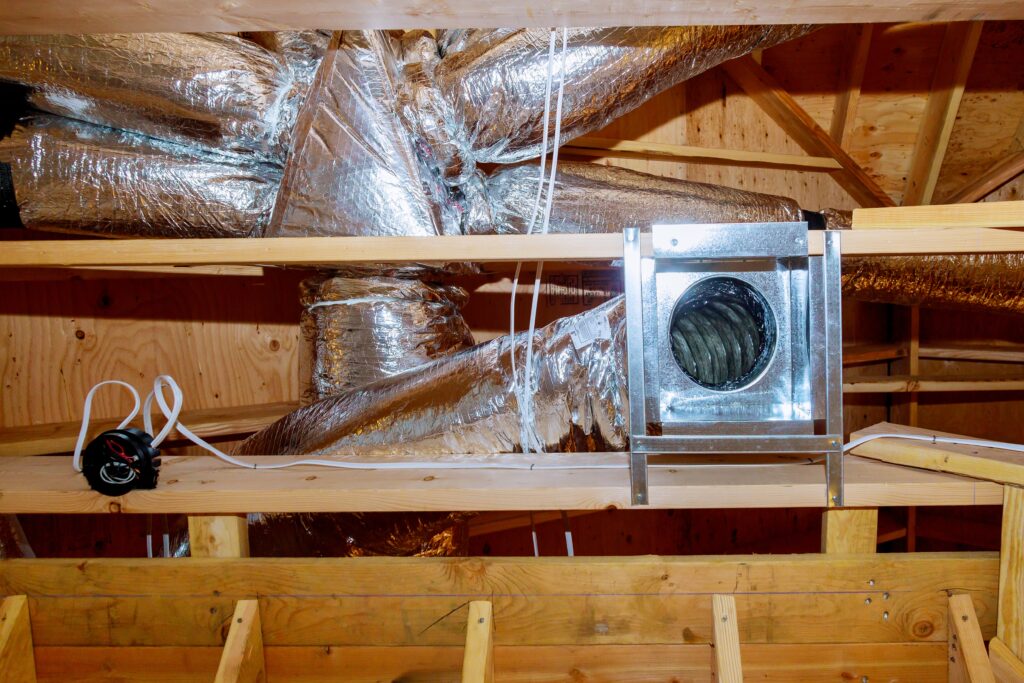
Ductwork is the delivery system for every cubic foot of air your family breathes, and its condition determines whether filtration upgrades actually reach the living space. Leaky return ducts running through an attic or crawlspace pull unfiltered air directly from those spaces into the system, bypassing your filter entirely. That means attic dust, insulation fibers, rodent droppings, and whatever else lives in an unconditioned space gets delivered straight to your bedrooms. Typical residential duct systems lose 20 to 30 percent of their airflow to leakage, and returns tend to be leakier than supplies because they are often built with panned joist cavities and platform returns rather than sealed sheet metal. Sealing return leaks with mastic or approved foil tape is one of the highest-value air quality improvements available, and it reduces heating costs at the same time. A technician can identify problem areas visually and with pressure testing during a duct inspection.
Duct cleaning is a separate service from duct sealing, and it is worth understanding when it helps and when it does not. Cleaning removes accumulated dust, debris, and biological growth from the interior duct surfaces, and it makes a real difference in homes that have had construction work, rodent intrusion, water damage, or visible mold in the system. It is also warranted when the ducts have simply never been cleaned across decades of operation and are carrying a heavy dust load. Duct cleaning is not an annual necessity for a well-maintained system with good filtration, and any company suggesting otherwise is overselling. The honest guidance is to have the ducts inspected, then clean them when the inspection shows a genuine need. Proper cleaning uses negative pressure collection equipment and agitation tools rather than just a shop vacuum at the register.
Insulation condition on ductwork in unconditioned spaces affects air quality indirectly but meaningfully. Uninsulated or poorly insulated ducts in a cold attic allow supply air to lose temperature before it reaches the room, which extends run times and increases the amount of air pulled through any leaks in the system. In cooling season the same ducts sweat, and that condensation soaks insulation and creates conditions for mold growth inside the duct assembly. Flex duct that has been crushed, kinked, or left with excessive sag restricts airflow and creates low-velocity zones where dust settles and accumulates. A visual inspection of accessible duct runs catches most of these problems, and repairs are generally straightforward. Want your ductwork evaluated before the heating season? Click here for our air duct services.
Equipment Cleaning and Indoor Air Quality Before Flu Season
The blower wheel is one of the dirtiest components in a typical residential system, and almost no homeowner ever looks at it. Dust that slips past the filter accumulates on the individual blades of the squirrel cage wheel, and a heavy coating measurably reduces airflow while adding load to the motor. Once that accumulation reaches a certain point, it also becomes a surface for biological growth in humid conditions, and that growth releases spores into the airstream every time the blower starts. Cleaning a blower wheel properly requires pulling the assembly, which is why it gets skipped by lower-cost service providers. A visual check during a fall tune-up tells you whether cleaning is needed this year or can wait.
The evaporator coil is the other component that directly affects air quality, and it sits in a location where moisture and dust combine into a genuine problem. During cooling season the coil runs below dew point and condenses water continuously, and any dust that reaches the coil face gets trapped in that moisture. The result is a layer of packed debris between the fins that restricts airflow and holds moisture long after the cooling season ends. That damp organic material supports mold and bacterial growth, which is the source of the sour smell many homeowners notice when the system first runs each season. Coil cleaning with appropriate cleaning chemicals and adequate rinse restores both airflow and cleanliness, and it should be evaluated annually even if it is not performed annually. The condensate drain pan and drain line need attention at the same visit, since standing water in a pan is a direct air quality problem.
Heat exchanger inspection belongs in this section for safety reasons that overlap with air quality. A cracked heat exchanger in a gas furnace can allow combustion gases including carbon monoxide to mix with the supply air stream, and that is the most serious air quality failure a residential system can produce. Technicians inspect heat exchangers visually with cameras, check for flame disturbance during blower operation, and test combustion when conditions warrant. Carbon monoxide detectors on every level of the home are essential regardless of the age or condition of the furnace, and they should be tested and have batteries replaced at the start of every heating season. Combustion air supply also matters, because a furnace in a tight closet without adequate makeup air can operate improperly and produce elevated CO. These items get checked on every properly performed heating tune-up, and they are the reason pre-season service is not optional.
Thermostat and Control Settings for Indoor Air Quality Before Flu Season
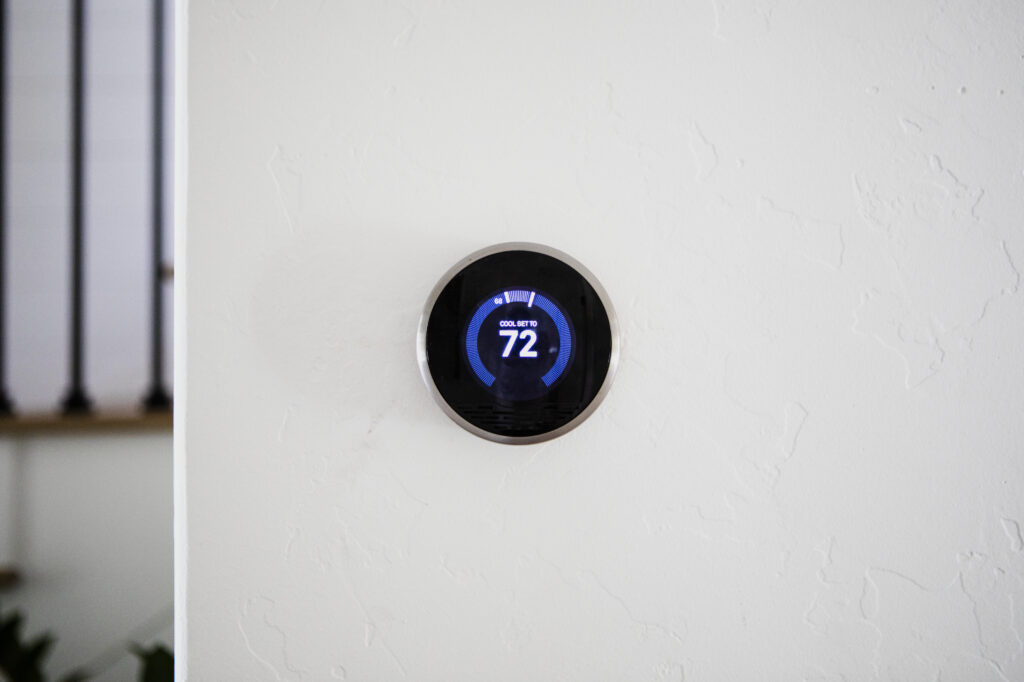
Your thermostat controls more of your indoor air quality than most homeowners assume, particularly on systems with variable speed equipment. The fan setting alone changes how much air passes through your filter over the course of a day, and switching from auto to on or to a scheduled circulation mode dramatically increases total filtration throughput. Older single-speed blowers consume meaningful power in continuous mode, so the calculation is different depending on your equipment. Modern ECM blower motors run continuous circulation at very low wattage, which makes it a low-cost air quality improvement. Many smart thermostats include a circulation setting that runs the fan for a set number of minutes per hour, splitting the difference between auto and continuous operation.
Humidity control integration is the other capability worth using. Thermostats that accept a humidity sensor and control a whole-home humidifier can maintain a target range automatically and adjust that target based on outdoor temperature. That automatic adjustment prevents the window condensation problem that manual humidistats cause when the weather turns cold suddenly. Some thermostats also monitor filter runtime and send a reminder when replacement is due, which is more accurate than a calendar reminder because it accounts for actual system operation. Ventilation control is available on higher-tier models that can operate an ERV on a schedule or in response to indoor conditions. These features exist on equipment homeowners already own in many cases, and they simply have not been configured.
Temperature setpoint strategy affects air quality through its influence on humidity and run time. Deep setbacks that let the house drop substantially overnight cause the furnace to run long recovery cycles in the morning, which spikes dry air delivery and can make the humidity swing uncomfortable. A moderate setback of a few degrees usually delivers most of the energy savings without the recovery penalty. Zoning systems add another layer of control by allowing different setpoints in different areas, which matters during flu season when someone is isolating in one part of the house. Correct thermostat placement away from supply registers, exterior walls, and direct sunlight is a basic requirement that is violated in a surprising number of homes. Looking to upgrade your controls this fall? Click here for our thermostat services.
Why You Need Professional Indoor Air Quality Service Before Flu Season
Indoor air quality work rewards accurate diagnosis far more than it rewards buying products. A homeowner can replace a filter and run a portable purifier, but identifying return leakage, measuring static pressure, evaluating coil condition, and sizing a humidifier correctly all require training and instruments. The difference between a system that genuinely improves the air in your home and one that just costs money shows up in those details. Fall scheduling gives you the widest range of options because equipment is available and technicians are not buried in emergency heating calls. Breezio AC serves Visalia and communities throughout Tulare, Fresno, and Kings counties with residential and commercial HVAC service. Getting this handled before flu season means one visit rather than a scramble in January.
What Professional Indoor Air Quality Service Before Flu Season Includes
A proper indoor air quality assessment starts with measurement rather than a sales pitch. Technicians check static pressure across the system to determine how much filtration the equipment can support without airflow problems, then evaluate the return path for leakage and undersizing. Coil condition, blower wheel condition, and drain pan status all get documented, along with the current filter type and its actual fit in the housing. Duct runs in accessible areas are inspected for damage, disconnection, and insulation condition. That information determines what upgrades will actually work on your specific system.
From there the recommendations follow the findings rather than a fixed product list. Some homes need nothing more than a filter upgrade and return sealing, which is an inexpensive fix with immediate results. Others benefit from a media cabinet, a whole-home humidifier, or a coil-mounted UV lamp depending on what the assessment turns up. Homes with recurring moisture or mold issues may need duct cleaning followed by sealing to prevent the problem from returning. The point is matching the solution to the actual condition of the house and system.
Installation quality determines whether any of it performs as intended. A media cabinet that leaks around the filter frame allows bypass air to skip the filter entirely, which defeats the purpose of the upgrade. A humidifier installed without a properly routed drain or without an outdoor sensor creates more problems than it solves. Duct sealing done with cloth-backed duct tape rather than mastic or foil tape fails within a few seasons. Getting the installation right the first time is what separates a lasting improvement from a repeat service call.

How Seasonal Timing Affects Indoor Air Quality Before Flu Season
September and October are the right months for this work in the Central Valley for practical reasons. The cooling season has wound down, so the evaporator coil and drain pan can be cleaned and dried without immediately being put back into service. The heating season has not started, so a furnace can be opened up, inspected, and serviced without anyone going cold. Installation work that requires the system to be down for several hours is far easier to schedule when outdoor temperatures are mild.
Scheduling early also means the improvements are in place before viral transmission peaks. Flu activity in California typically climbs through November and December and peaks in late December through February, which means work completed in September provides benefit through the entire season. A humidifier installed in January has already missed a substantial portion of the dry-air weeks. The same logic applies to filtration upgrades and duct sealing.
There is also a scheduling reality worth acknowledging. The first genuinely cold week of the year generates a flood of no-heat calls across the valley, and every HVAC company’s schedule fills immediately. Homeowners who wait until then face longer lead times for non-emergency work like air quality improvements. Booking a fall service visit puts you ahead of that rush. Ready to get your system ready for the season? Click here for our air conditioning and heating services.
Why Choose Breezio AC for Indoor Air Quality Before Flu Season
Breezio AC brings more than 30 years of hands-on HVAC experience to residential and commercial work throughout the Visalia area. We are licensed and insured in California, and our technicians handle filtration upgrades, humidifier installation, duct sealing and cleaning, coil service, and complete heating system maintenance. That range matters for air quality work because the fix often spans several parts of the system rather than one component.
We include a two-year maintenance plan with every installation, which keeps filters, coils, and drains on a regular service schedule rather than leaving them until something fails. Flexible financing is available for larger projects like duct replacement or ventilation equipment. Our 24/7 emergency service means a heating failure during a cold week gets addressed without a multi-day wait.
We serve Visalia along with Tulare, Hanford, Dinuba, Exeter, Porterville, Fresno, Lemoore, Selma, Kingsburg, Reedley, and surrounding communities across the valley. Our approach is straightforward: assess the system, explain what we find, and recommend only the work that will actually improve your air. Call (559) 202-0224 or email support@breezioac.com to schedule your fall indoor air quality assessment before flu season arrives.