
Why Fall Is the Best Time for HVAC Tune Ups
Fall sits in the quiet space between two demanding seasons, and that is exactly what makes it the smartest window for HVAC tune ups in the Central Valley. Your air conditioner just finished months of running hard through Visalia summer heat, and your furnace is about to be asked to work for the first time in half a year. Scheduling service during this shoulder season lets a technician catch summer wear before it turns into a breakdown, while there is still time to order parts without leaving you in an uncomfortable house. Homeowners who wait until the first cold snap in November often find themselves competing with everyone else for the same appointment slots. Fall also gives you a rare advantage that no other season offers, because both the cooling side and the heating side of your system can be inspected under moderate outdoor conditions that do not stress the equipment. Energy bills tend to drop after a proper tune up, since a clean, correctly charged, properly adjusted system moves the same amount of air using measurably less electricity and gas. The whole visit usually takes a couple of hours, and the payoff carries through two full seasons. If you have been putting off maintenance since spring, this is the month to fix that.
What a Fall HVAC Tune Up Includes for Central Valley Homes
A fall HVAC tune up is not a quick glance at the thermostat and a handshake at the door. It is a structured inspection that covers the heat exchanger, burners, blower assembly, electrical connections, refrigerant charge, condensate drainage, and airflow across the entire system. Technicians follow a checklist because HVAC failures rarely announce themselves; they build slowly through dirty coils, loose wiring, and drifting gas pressure until something finally quits on the coldest night of the year. In Visalia, Tulare, and Hanford, the dust and agricultural particulate load in the air makes filter and coil condition a much bigger factor than it would be in a coastal city. A good tune up also documents readings so you have a baseline to compare against next year. Anything found out of spec gets flagged with a recommendation, not a scare tactic. The goal is a system that starts on the first try in December and holds temperature without short cycling.
The Heating Side of a Fall HVAC Tune Up
The furnace inspection is the centerpiece of any fall HVAC tune up, and it begins with the heat exchanger. A technician looks for cracks, rust streaks, corrosion at the seams, and any sign of flame impingement that would indicate the burners are firing incorrectly. Cracked heat exchangers are the single most serious failure in residential heating because they allow combustion gases, including carbon monoxide, to mix with the air moving into your living space. Visual inspection is paired with a combustion analysis on many systems, which measures carbon monoxide levels, oxygen content, and flue gas temperature at the vent. Those numbers tell a trained technician far more than appearance alone, since a hairline crack can hide behind a bend in the metal. If readings come back outside manufacturer specification, the technician will explain what the numbers mean and what the safe options are. This part of the inspection is the reason fall maintenance is a safety issue and not just a comfort upgrade.
Burners and the ignition system get cleaned and tested next, because most no-heat calls trace back to this assembly rather than anything catastrophic. Dust, spider webs, and rust flakes accumulate in burner ports over a summer of sitting idle, and that debris causes uneven flame, delayed ignition, and rollout. A technician brushes and vacuums the burners, inspects the flame sensor, and cleans the sensor rod so it can reliably prove the flame is present. Hot surface igniters are checked for resistance and for the hairline fractures that develop after several hundred heating cycles. Gas pressure is measured at the manifold with a manometer and adjusted to match the rating plate, since overfiring wastes fuel and underfiring produces weak heat. The technician also verifies that the inducer motor is drawing proper amperage and that the pressure switch closes as designed. Small adjustments here often produce noticeable improvements in how quickly your house reaches temperature.
The venting, safety controls, and condensate handling round out the heating portion of the visit. Flue pipes are checked for proper slope, secure connections, and blockage from bird nests or debris, which happens more often than homeowners expect. On high efficiency condensing furnaces, the secondary heat exchanger drains acidic condensate, and that drain line clogs with biological growth if it is never flushed. A plugged drain trips the pressure switch and shuts the furnace down, usually at the worst possible moment. Limit switches, rollout switches, and the blower door interlock are all tested to confirm they will actually cut power if something goes wrong. The technician cycles the furnace through a complete call for heat and watches the sequence of operation from ignition through blower off delay. Anything that hesitates, chatters, or runs out of order gets diagnosed before it becomes a service call in January. Need your furnace checked before winter? Click here for our furnace service.

The Cooling Side of a Fall HVAC Tune Up
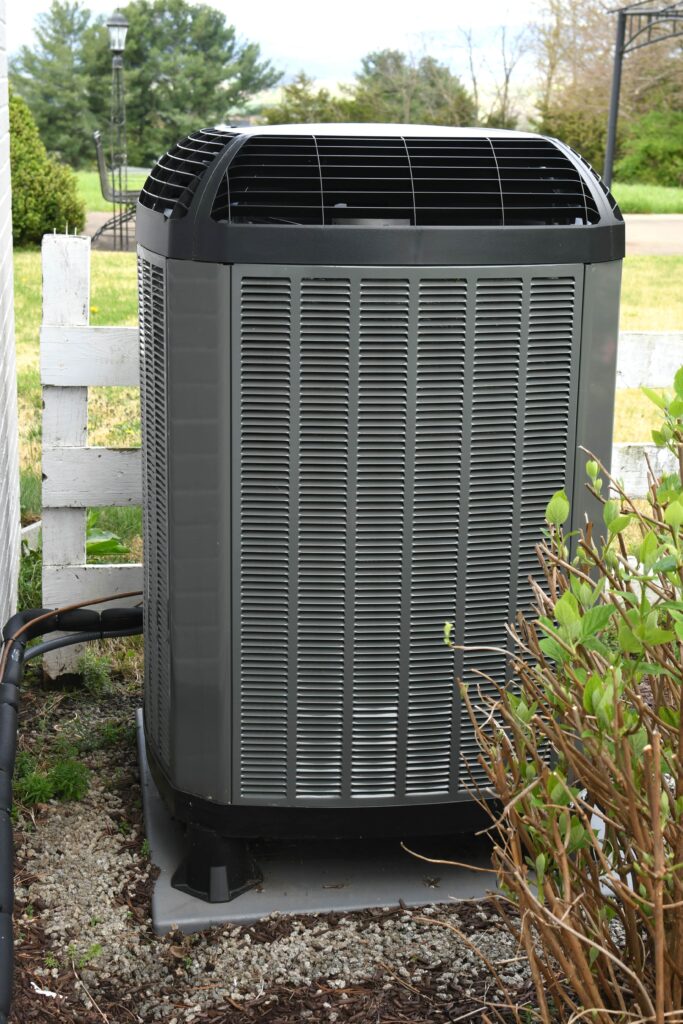
Skipping the air conditioner in fall is a mistake that costs homeowners real money the following June. Your outdoor unit just ran through triple digit Central Valley afternoons for months, and the condenser coil is carrying a season of cottonwood, dust, and agricultural debris packed into its fins. That buildup raises head pressure, forces the compressor to work harder for the same cooling output, and shortens the life of the most expensive component in the system. Cleaning the coil in October means the unit sits through winter without corrosive debris trapped against the aluminum. Technicians also check the fan motor bearings, capacitor microfarad rating, and contactor points, all of which are cheap to replace on a scheduled visit and expensive to handle as an emergency. A capacitor that reads ten percent below its rating will usually make it through winter and fail in the first week of real heat.
Refrigerant charge and system pressures are verified while outdoor temperatures are still warm enough to get accurate readings, which is one of the practical reasons fall beats winter for full system service. An undercharged system points to a leak somewhere in the line set, evaporator, or condenser, and finding that leak in autumn gives you time to repair it properly. Overcharge is just as damaging, since excess refrigerant floods the compressor and causes liquid slugging over time. Technicians measure superheat and subcooling rather than relying on pressure gauges alone, because those calculations reveal how the system is actually performing under load. Temperature split across the evaporator coil is recorded and compared against expected values for the equipment. Documented readings let you see year over year whether performance is drifting, which is the earliest warning sign of a slow refrigerant leak.
Indoor coil condition and condensate management matter just as much as anything happening outside. The evaporator coil collects a film of dust that bonds with condensation and forms an insulating layer, which quietly reduces capacity by a surprising margin. Fall is a good time to clean that coil because the system will not be called on for cooling while the cleaner works and the drain clears. Condensate pans and drain lines are flushed to prevent the algae buildup that causes overflow, water damage, and ceiling stains. The float switch, which shuts the system off if the pan fills, is tested to confirm it functions. Blower wheels are inspected too, since a dirty squirrel cage moves dramatically less air and forces both heating and cooling to run longer than necessary. Want your cooling system serviced before it sits idle for the winter? Click here for our air conditioning services.
Airflow, Ductwork, and Thermostat Checks in a Fall HVAC Tune Up
Airflow is the part of a fall HVAC tune up that homeowners underestimate most, and it affects every other component in the system. A furnace or air conditioner is engineered to move a specific volume of air across the heat exchanger or coil, and falling short of that volume causes overheating in winter and coil freezing in summer. Technicians measure static pressure across the system with a manometer, which functions roughly like taking blood pressure for your ductwork. High static pressure points to undersized returns, crushed flex duct, closed registers, or a filter that is far too restrictive for the equipment. Correcting airflow problems often solves comfort complaints that homeowners assumed required a whole new system. It also reduces the electrical draw of the blower motor, which runs during both heating and cooling cycles.
Duct condition gets inspected because leaky ducts in an unconditioned attic waste a large share of the air you paid to heat. Central Valley attics get brutally hot in summer and cold in winter, so every disconnected boot and gap in a plenum bleeds conditioned air into a space nobody lives in. Technicians look for crushed sections, separated joints, missing insulation, and sagging runs that create restriction. Sealing accessible leaks is a straightforward improvement with a clear payback on the utility bill. Return air paths matter as well, since a system that cannot pull air back efficiently will never deliver properly no matter how new the equipment is. Dirty ducts also circulate the dust load that Valley homes accumulate. Want to know what condition your ductwork is in? Click here for our air duct services.
Thermostat calibration and control verification finish the airflow portion of the visit. A thermostat that reads three degrees off will make the system run longer than needed and drive up bills without anyone realizing why. Technicians confirm the temperature reading against a calibrated instrument, check the wiring at both ends, and verify that heating and cooling stages engage in the correct order. Programmable and smart thermostats get their schedules reviewed so the settings actually match how the household lives. Wiring at the terminal board is tightened, because loose low voltage connections cause intermittent faults that are miserable to diagnose later. Batteries in battery powered units are replaced as a matter of routine. Small as it sounds, thermostat work often produces the most immediately noticeable change in comfort. Thinking about upgrading your controls? Click here for our thermostat services.
How a Fall HVAC Tune Up Lowers Energy Bills and Prevents Breakdowns
The financial argument for fall maintenance is straightforward once you understand where efficiency losses come from. HVAC systems do not fail all at once; they degrade in small increments through dirty coils, weak capacitors, drifting gas pressure, restricted airflow, and slowly leaking refrigerant. Each of those problems adds a few percent to your operating cost, and together they can push a system well past twenty percent above its rated consumption. A tune up reverses most of that degradation for a fraction of what the wasted energy costs over a full season. Breakdown prevention works the same way, since the majority of emergency calls trace back to a component that showed measurable warning signs months earlier. Catching a failing capacitor or a clogged drain during a scheduled visit costs a fraction of an after hours emergency repair. Fall timing maximizes both benefits because it precedes the heating season and follows the cooling season.
Energy Savings You Get From a Fall HVAC Tune Up
Utility costs in Tulare and Fresno counties climb sharply once heating season begins, and a poorly tuned furnace burns noticeably more gas to hold the same indoor temperature. Combustion efficiency depends on correct gas pressure, clean burners, adequate combustion air, and proper venting, and every one of those variables drifts over time. A furnace firing above its rated input sends the extra heat straight up the flue rather than into your house. Technicians adjust the manifold pressure back to specification and clean the burner assembly so the flame burns cleanly and completely. The difference shows up on the bill within the first full month of cold weather. Homeowners who track their usage often see the change clearly.
Airflow improvements deliver savings that persist across both seasons because the blower motor runs during every heating and cooling cycle. A restricted system forces the motor to work against pressure it was never designed to overcome, drawing more amperage for less delivered air. Replacing a restrictive filter with a correctly sized one, opening blocked returns, and repairing crushed duct sections all reduce that load. Runtime drops because the house reaches temperature faster and holds it more evenly. Even rooms that never felt comfortable often improve once static pressure comes back into range. Those gains cost nothing extra once the technician is already on site.
Refrigerant charge and coil cleanliness carry the cooling side of the savings, and addressing them in fall means you start next summer at full capacity. A condenser coil packed with debris can raise compressor energy draw substantially while delivering less cooling for the effort. Correct charge keeps the compressor operating within its designed envelope rather than straining at the edges. Clean evaporator coils transfer heat the way the engineering intended, shortening cycles and improving dehumidification. None of this is dramatic on any single day, but across a Central Valley summer it adds up to real money. Looking for ongoing efficiency help? Click here for our heat pump services.
Breakdown Prevention Through a Fall HVAC Tune Up
Most heating emergencies are predictable, and that is the entire premise behind seasonal maintenance. Flame sensors fail gradually as oxidation builds on the rod, producing intermittent lockouts before a total shutdown. Hot surface igniters develop micro fractures that survive a few more cycles until they do not. Pressure switches stick, inducer motors get noisy, and condensate drains slowly restrict until they finally block. A technician who inspects these components in October sees the early evidence and replaces the part on a planned visit at a planned cost. The alternative is a cold house, a weekend call, and an emergency rate.
Electrical connections deserve specific mention because heat cycling loosens terminals over time, and loose connections generate resistance heat. That resistance burns contacts, melts insulation, and occasionally causes fires in the equipment cabinet. Technicians torque connections, inspect wire condition, test contactor points for pitting, and check amperage draw on every motor. A motor pulling above its rated amperage is telling you the bearings are failing well before the noise starts. Capacitors are tested with a meter rather than judged by appearance, since a bulging case is a late symptom rather than an early one. These are inexpensive parts that cause expensive failures when ignored.
Safety controls are the last line of defense, and they need verification precisely because they operate only during abnormal conditions. Rollout switches, high limit switches, pressure switches, and flame proving circuits sit unused for years and then have to work correctly on demand. A technician tests each one rather than assuming function, because a failed safety that never trips is invisible until the day it matters. Carbon monoxide detection in the home is discussed as part of the same conversation. Combustion equipment deserves that level of attention every single year. Fall is the right time to do it, before the furnace runs continuously for months.
Scheduling Advantages of Booking a Fall HVAC Tune Up
Appointment availability is a practical reason to book in fall that has nothing to do with the equipment itself. The first genuine cold snap in the Central Valley generates a flood of no heat calls, and every HVAC company in the region books solid within days. Homeowners who scheduled ahead already had their system checked and are not in that queue. Parts availability follows the same pattern, since distributors run low on common components exactly when demand spikes. Ordering a heat exchanger, control board, or blower motor in October is far easier than in January. Time pressure also disappears, which means repairs get done properly rather than patched.
Fall weather itself makes the work better. Technicians can safely shut a system down for a thorough cleaning without leaving anyone in dangerous heat or cold. Attic and crawlspace work is manageable in seventy degree weather and miserable at any other time of year. Coil cleaning, duct inspection, and combustion testing all go more thoroughly when nobody is rushing to restore comfort. That translates directly into a more complete visit and better documentation of your system’s condition.
Planning also gives you options if a technician finds something significant. Discovering a cracked heat exchanger or a failing compressor in autumn means you can compare replacement equipment, review financing, and choose a system that fits your home rather than accepting whatever is available immediately. Rushed replacements produce compromises in sizing, efficiency, and price. A fall diagnosis turns a potential crisis into a manageable decision. Considering a system upgrade or ductless option? Click here for our mini split services.
Why You Need a Fall HVAC Tune Up From Breezio AC
Fall maintenance protects the two largest comfort investments in your home and does it before either one faces peak demand. You get a safer furnace, a cleaner air conditioner, better airflow, lower utility bills, and a documented record of your system’s condition. The visit takes a couple of hours and prevents the kind of failure that ruins a holiday week. Central Valley homes deal with dust, heat, and heavy runtime that make annual service more necessary here than in milder climates. Breezio AC serves Visalia and the surrounding communities with technicians who inspect thoroughly and explain honestly. Booking now means you are ready before anyone else is calling.
Booking Your Fall HVAC Tune Up in Visalia and Nearby Cities
Breezio AC works throughout Tulare, Kings, and Fresno counties, covering homes from Visalia and Tulare out through Hanford, Porterville, and Dinuba. Coverage extends across smaller communities including Exeter, Farmersville, Lindsay, Woodlake, Ivanhoe, Goshen, Orosi, Strathmore, Selma, Kingsburg, Parlier, Reedley, Lemoore, and Fresno. Local coverage matters because a company that works in your area every day understands the specific equipment, dust conditions, and utility considerations you deal with. Scheduling is straightforward by phone or email. See if we cover your city; click here for our Visalia area service locations.
Appointments in fall tend to run on schedule because the emergency volume has not started yet. That means a technician arrives with time to do the full inspection rather than compressing it between urgent calls. You get a walkthrough of the findings, the readings that were taken, and a clear explanation of anything that needs attention. Nothing gets recommended without a reason you can understand. Questions are welcome, and answers come in plain language.
Commercial properties get the same attention, including restaurants and facilities with kitchen exhaust systems that require separate specialized service. Rooftop units, packaged systems, and refrigeration equipment all benefit from the same seasonal timing. Businesses avoid the operational disruption that comes with an equipment failure during peak hours. Running a commercial kitchen? Click here for our kitchen hood cleaning service.
What to Expect During Your Fall HVAC Tune Up Appointment
A technician arrives, reviews any comfort concerns you have noticed, and starts with the equipment you use next, which in fall means the heating system. Filters are checked and replaced, the cabinet is opened, and the inspection follows a consistent order so nothing gets skipped. Readings are recorded as the work progresses rather than reconstructed afterward. You are welcome to watch and ask questions throughout. Most visits take between one and two hours depending on system type and condition.
If everything checks out, you get a clean report and a system ready for the season. If something needs attention, you get an explanation of what was found, why it matters, and what the options are, including doing nothing if the issue is minor. Pricing is presented before any additional work begins. There is no pressure to approve repairs on the spot.
Documentation from each visit builds a history of your equipment over time. That record helps identify slow trends like refrigerant loss or declining motor performance that no single visit would reveal. It also supports warranty claims, since most manufacturers require proof of annual maintenance. Keeping that paperwork is worth more than most homeowners realize.
Why Choose Breezio AC for Your Fall HVAC Tune Up
Breezio AC is licensed and insured in California and brings more than thirty years of hands on HVAC experience to every appointment. That depth matters when a diagnosis is not obvious and the easy answer would be to sell you something you do not need. Technicians are trained to measure, document, and explain rather than guess. Residential and commercial systems both get the same standard of work. Reliable, five star service on every job is the expectation, not the marketing line.
Emergency service is available twenty four hours a day, which matters when a heating system quits on a cold Central Valley night. Flexible financing options are available for larger repairs and replacements so an unexpected failure does not become a financial crisis. Every new installation includes a two year maintenance plan, which keeps the equipment covered and performing from day one. Those commitments exist because long term relationships beat one time transactions.
Reaching the team is simple. Call (559) 202-0224 or email support@breezioac.com to schedule your fall HVAC tune up. The office is located at 7730 W Sunnyview Ave #5 in Visalia, and coverage extends across the surrounding valley. Book before the first cold weekend and go into winter knowing your system is ready.