
Why Your Thermostat Readings Do Not Match Room Temperature
Your thermostat says 74 degrees, but the living room feels like 80. This is one of the most common comfort complaints homeowners report during a Central Valley summer. A thermostat is only a sensor; it reads the air temperature at one specific spot on one specific wall. When that spot does not represent the rest of your home, the readings and the real room temperature drift apart. Sometimes the cause is simple, like sunlight hitting the thermostat in the afternoon. Other times the mismatch points to a deeper problem with your air conditioner, your ductwork, or the thermostat itself. Ignoring the gap costs you money because your cooling system runs on bad information. This guide explains why thermostat readings do not match room temperature and what you can do to fix it before the next heat wave hits Visalia.
Common Reasons Your Thermostat Readings Do Not Match Room Temperature
A thermostat mismatch almost always traces back to one of three causes: placement, sensor condition, or airflow. Placement problems happen when the thermostat sits in a spot that is warmer or cooler than the rooms you actually use. Sensor problems develop over time as dust, corrosion, and age throw off the internal readings. Airflow problems come from ductwork that delivers uneven cooling, so some rooms swing far from the number on the wall. Each cause produces a slightly different symptom, and identifying the right one saves you from replacing parts that were never broken. Central Valley homes face all three risks because of intense afternoon sun, dusty air, and long duct runs through hot attics. The sections below break down each cause so you can narrow down your own situation. Once you know the source, the fix is usually straightforward.
Poor Thermostat Placement Causes Inaccurate Thermostat Readings
Thermostat placement matters more than most homeowners realize. A thermostat mounted on a wall that receives direct sunlight will read several degrees warmer than the actual room temperature during the afternoon. Your air conditioner then runs longer than needed, overcooling the rest of the house while the thermostat insists it is still hot. The reverse happens when a thermostat sits near a supply vent; cold air blows directly across the sensor, the thermostat thinks the house is cool, and the system shuts off early. Kitchens, hallways near exterior doors, and walls shared with a garage are other trouble spots. Heat from ovens, drafts from doors, and warmth radiating through an uninsulated garage wall all corrupt the reading. The thermostat is doing its job perfectly; it is just measuring the wrong air.
Interior walls in central hallways are the ideal mounting location for a reason. These spots stay close to the average temperature of the whole home and avoid direct sun, drafts, and appliance heat. If your thermostat sits somewhere else, you may notice the mismatch follows a daily pattern. A west facing wall causes late afternoon problems, while a spot near the front door acts up every time someone comes and goes. Track when the readings drift and you can often identify the placement issue yourself. Lamps and televisions placed directly below a thermostat cause the same problem because rising heat fools the sensor. Even a large piece of furniture blocking air circulation around the thermostat can trap a pocket of stale air and skew the number.
Older homes in Visalia, Tulare, and Hanford frequently have thermostats installed decades ago in locations chosen for wiring convenience rather than accuracy. Remodels make this worse when walls move but the thermostat stays put. A hallway that once had good circulation may now sit behind a new door or partition. Relocating a thermostat requires running new low voltage wiring, which is a job for a qualified technician. Wireless remote sensors offer another solution because they let the system average readings from multiple rooms. Either fix eliminates the placement problem at the source. Need help moving or upgrading your unit? Click here for our thermostat services.
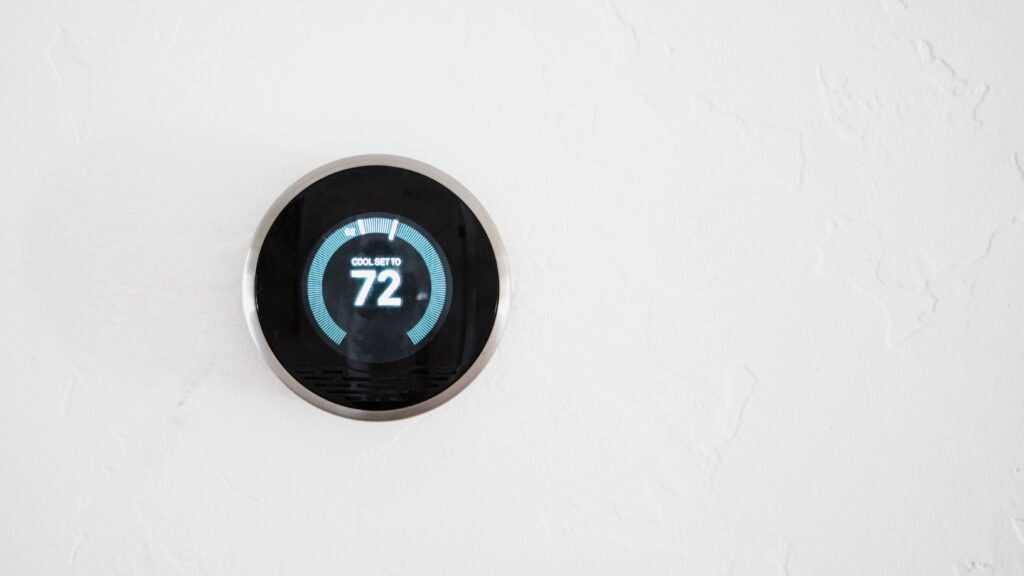
Dirty Sensors and Aging Parts Skew Thermostat Readings
Inside every thermostat is a temperature sensor, and that sensor must stay clean to stay accurate. Dust builds up inside the housing over the years, insulating the sensor from the surrounding air. An insulated sensor responds slowly and reads temperatures that lag behind reality. Central Valley homes deal with heavy agricultural dust, so this problem shows up here faster than in many other regions. Older mechanical thermostats with bimetallic coils and mercury switches drift even further as springs weaken and contacts corrode. A drift of three to five degrees is common in thermostats more than ten years old. That drift means your air conditioner starts and stops at the wrong times every single day.
Calibration loss is another aging problem that homeowners rarely check. Digital thermostats leave the factory calibrated, but electronic components degrade, and voltage fluctuations can shift the baseline over time. You can test your own unit with a simple experiment. Tape an accurate room thermometer to the wall a few inches from the thermostat, wait fifteen minutes, and compare the two readings. A gap of one degree is normal; a gap of three or more degrees means the thermostat needs recalibration or replacement. Weak batteries also cause erratic readings in battery powered models, so swap in fresh batteries before assuming the unit has failed. A loose wire connection behind the faceplate produces similar symptoms and is easy for a technician to spot.
Some thermostats cannot be recalibrated and simply need replacement once they drift. Replacement is not a bad outcome, because modern thermostats are dramatically more accurate than units from even ten years ago. Digital sensors hold their calibration longer and respond faster to temperature changes. Many models also display humidity, which matters for comfort during muggy stretches of summer. A failing thermostat often causes short cycling, where the air conditioner turns on and off rapidly without completing a full cooling cycle. Short cycling wears out compressors, and compressors are the most expensive part of your system. Replacing a faulty forty dollar sensor unit protects a multi thousand dollar air conditioner, so the math strongly favors acting early.
Ductwork Problems Create Room Temperature Differences Your Thermostat Misses
Sometimes the thermostat reads its local air correctly, but the rooms far from it tell a different story. This is a ductwork and airflow problem rather than a thermostat problem. Leaky ducts lose cooled air into the attic before it ever reaches the bedrooms, so those rooms run warm while the hallway near the thermostat stays comfortable. The Department of Energy estimates that typical duct systems lose 20 to 30 percent of conditioned air through leaks, holes, and poor connections. In a Central Valley attic that reaches 130 degrees in July, every lost cubic foot of cool air hurts. The thermostat satisfies its setpoint, shuts off the system, and leaves half the house sweating. No thermostat adjustment can fix air that never arrives.
Undersized ducts, crushed flex duct, and closed or blocked registers cause the same uneven cooling. A duct pinched by attic storage or sagging between supports chokes airflow to whatever room it serves. Long duct runs to additions and bonus rooms often deliver weak airflow because the original system was never designed for the extra load. Dirty air filters compound everything by restricting airflow across the entire system. When airflow drops, the evaporator coil can even freeze, and a frozen coil delivers almost no cooling at all. You will see the thermostat holding steady while room temperatures climb, which is a confusing symptom until you know the cause. Checking your filter monthly during summer is the cheapest fix in all of HVAC.
Poor insulation and duct location also drive temperature differences between the thermostat and distant rooms. Ducts running through unconditioned attics absorb heat along the entire run, so the air arriving at the far end is warmer than the air that left the unit. Rooms with large west facing windows gain heat faster than the hallway where the thermostat lives, creating an afternoon gap even with perfect ducts. Duct sealing, added insulation, and airflow balancing address these issues directly. A technician can measure the temperature at each register and pinpoint exactly where cooling is being lost. Balancing dampers can then redirect airflow to the rooms that need it most. Suspect your ducts are the problem? Click here for our air duct services.
How to Fix Thermostat Readings That Do Not Match Room Temperature
Fixing a thermostat mismatch starts with diagnosis, because the right repair depends entirely on the cause. Start with the free checks: replace the thermostat batteries, swap the air filter, and confirm no lamp, sunlight, or vent is affecting the thermostat wall. Next, run the thermometer comparison test described above to see if the thermostat itself reads inaccurately. If the thermostat reads correctly but rooms still feel wrong, shift your attention to airflow and ductwork. If the thermostat reads incorrectly, you are looking at recalibration, relocation, or replacement. Many homeowners can handle the simple checks, but calibration, wiring, and duct work require professional tools and training. The three approaches below cover the most effective fixes in order of complexity. Choose the one that matches your diagnosis and your budget.
Recalibrate or Relocate Your Thermostat for Accurate Readings
Recalibration is the first fix to try when your thermostat reads a few degrees off. Many digital thermostats include a temperature offset setting buried in the installer menu. This setting lets you adjust the displayed reading up or down to match a verified reference thermometer. Check your model’s manual for the exact menu path, because manufacturers hide this feature in different places. Older mechanical thermostats sometimes have a small calibration screw on the bimetallic coil, though adjusting it takes a careful hand. Set the offset, wait a full day, and compare readings again to confirm the fix held. If the thermostat keeps drifting after calibration, the sensor is failing and replacement is the better path. Recalibration costs nothing but a few minutes, so it is always worth attempting first.
Relocation solves placement problems that no calibration can overcome. A thermostat in direct sun will always mislead your system no matter how precisely it is calibrated, because the air it measures genuinely is hotter. Moving the unit to a central interior hallway puts the sensor in air that represents the whole home. Relocation involves extending or rerouting the low voltage control wires inside the wall, then patching the old location. A technician completes this work in a couple of hours in most homes. While the wall is open, it is smart to verify the wire condition, because brittle or nicked thermostat wire causes intermittent signal problems. Those intermittent problems show up as random system behavior that homeowners often blame on the air conditioner itself. Fixing the wiring during relocation prevents a second service call later.
Remote sensors offer a middle path when relocation is impractical. Many modern thermostats support wireless sensors that you place in bedrooms, offices, or any room where comfort matters most. The system then averages the readings or prioritizes whichever room you occupy at a given time. This approach solves the single point measurement problem that causes most thermostat mismatch complaints. Sensors are especially useful in two story homes, where the upstairs routinely runs five to ten degrees warmer than the downstairs thermostat indicates. Averaging upstairs and downstairs readings produces far better comfort than either floor gets alone. Sensor kits install in minutes and pair through the thermostat menu. For homes with chronic hot rooms, this is often the highest value fix available.
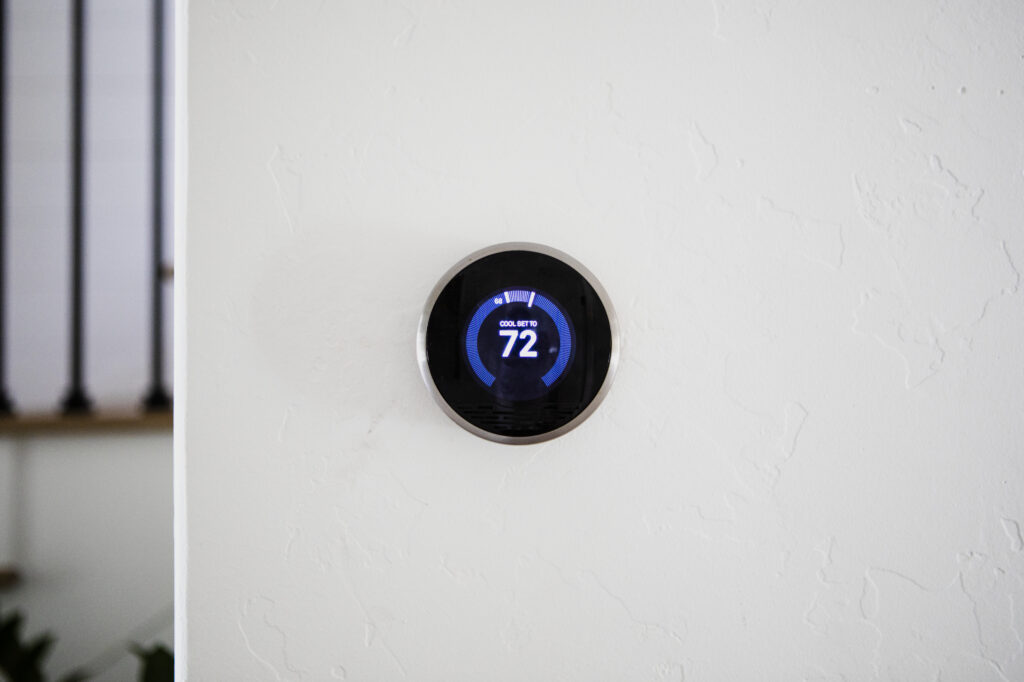
Upgrade to a Smart Thermostat for Better Room Temperature Control
Smart thermostats improve on accuracy in ways that go beyond a better sensor. These units learn how quickly your home heats up and cools down, then adjust run times to hit your target temperature precisely. They compensate for sensor lag automatically instead of waiting for you to notice a drift. Most support the remote room sensors described above, which directly attacks the mismatch between the thermostat wall and your living spaces. Many models also track humidity, and humidity control matters because damp air feels warmer than dry air at the same temperature. Geofencing features detect when you leave and return, trimming wasted runtime without sacrificing comfort. Energy reports show exactly how long your system runs each day, which helps you spot developing problems early. A sudden jump in runtime often signals a refrigerant or airflow issue before you feel any comfort change.
Accuracy gains from a smart thermostat translate directly into energy savings. ENERGY STAR estimates that certified smart thermostats save the average household about 8 percent on heating and cooling costs. In the Central Valley, where summer cooling dominates the utility bill, that percentage represents real money from June through September. Savings come from tighter temperature control, smarter scheduling, and the elimination of overcooling caused by bad readings. A system that stops running the moment the true room temperature hits the setpoint wastes nothing. Compare that to a miscalibrated thermostat that overshoots by three degrees on every cycle, all summer long. The upgrade often pays for itself within two cooling seasons. Utility rebates in California frequently reduce the upfront cost even further.
Installation is the one part of a smart thermostat upgrade that deserves professional attention. Many smart models require a common wire, called a C wire, to power the display and radios, and older homes often lack one. A technician can pull a new wire or install an adapter without damaging your equipment. Wiring mistakes during DIY installs can blow the low voltage fuse on the furnace control board, which shuts down both heating and cooling. Professionals also configure the thermostat correctly for your specific equipment type, including heat pumps, multi stage systems, and variable speed air handlers. Wrong configuration causes short cycling and comfort problems that mimic the very issues you were trying to fix. A proper setup takes under an hour and includes a walkthrough of the app and features. That small investment guarantees the upgrade actually delivers its promised accuracy.
Schedule Professional HVAC Service to Match Thermostat Readings to Room Temperature
Professional diagnosis becomes necessary when simple fixes do not close the gap between thermostat readings and room temperature. A technician brings calibrated instruments that measure what your senses cannot. They check the temperature split across the evaporator coil, which should typically fall between 15 and 20 degrees on a healthy air conditioning system. A weak split points to low refrigerant, a dirty coil, or airflow restriction, and each of those problems makes rooms warmer than the thermostat suggests. Technicians also measure static pressure in the duct system to find restrictions you cannot see. Register by register temperature readings reveal exactly which duct runs are underperforming. This data driven approach beats guesswork every time. You get the actual cause instead of a parade of replaced parts.
Refrigerant problems deserve special mention because they hide behind thermostat complaints so often. An air conditioner low on refrigerant still runs, still blows air, and still responds to the thermostat. It just removes less heat with every cycle, so the system runs longer and rooms drift above the setpoint during hot afternoons. Homeowners feel the warmth, look at the thermostat, and assume the thermostat is lying. Refrigerant does not get used up in normal operation; low levels always mean a leak that needs locating and repairing. Running a system low on refrigerant also starves the compressor of cooling, which shortens its life dramatically. Catching a leak early protects the most expensive component in your system. Think your air conditioner is underperforming? Click here for our air conditioning services.
Regular maintenance prevents most thermostat mismatch problems from developing in the first place. During a tune up, a technician cleans the sensors, verifies calibration, tests the wiring, and confirms the system hits its rated temperature split. They wash the condenser coil, check refrigerant pressures, and inspect duct connections for leaks. Each of these steps closes a potential gap between what the thermostat reads and what your rooms feel. Maintenance visits also catch small failures before they strand you during a 105 degree week in Tulare County. Systems that receive annual service run more efficiently, last longer, and hold temperature more precisely. The cost of a tune up is a fraction of a single emergency repair. Homeowners who maintain their systems rarely find themselves arguing with the thermostat in August.
Why You Need a Professional to Diagnose Thermostat and Room Temperature Problems
A thermostat mismatch looks like a small annoyance, but it sits at the intersection of electrical, mechanical, and airflow systems. The wall unit, the wiring, the control board, the refrigerant circuit, and the ductwork all influence the gap you feel. Guessing at the cause leads to replaced thermostats that fix nothing and hot rooms that persist through the summer. A professional isolates the true cause in one visit with proper instruments and proven diagnostic steps. That single accurate diagnosis saves weeks of trial and error and hundreds of dollars in unnecessary parts. In the Central Valley heat, getting it right the first time is not a luxury; it is how you keep your family safe and comfortable.
Accurate Thermostat Diagnosis Protects Your Cooling System
Misdiagnosed thermostat problems damage air conditioners in ways homeowners rarely see coming. A thermostat that reads low keeps the system running past its true setpoint, adding hours of unnecessary runtime every day. Extra runtime accelerates wear on the compressor, the blower motor, and the capacitors. A thermostat with faulty wiring can cause rapid short cycling, and short cycling is one of the leading causes of premature compressor failure. Compressor replacement often costs enough that homeowners choose full system replacement instead. Accurate diagnosis stops this damage chain at the source.
Professional diagnosis also catches problems that masquerade as thermostat issues. Low refrigerant, a freezing evaporator coil, a failing blower capacitor, and leaking ducts all produce rooms that do not match the thermostat display. A homeowner replacing the thermostat for any of these problems spends money and solves nothing. A technician tests each subsystem in sequence and identifies the real fault with certainty. The repair that follows actually fixes the comfort problem you called about. That certainty is the core value of professional service.
Documentation from a professional visit protects you going forward as well. You receive recorded readings for refrigerant pressures, temperature splits, and electrical values that become a baseline for future visits. Changes from that baseline reveal developing problems before they become failures. This history also supports warranty claims, since manufacturers frequently require proof of professional maintenance. Skipped maintenance can void coverage on major components. A paper trail from a licensed contractor keeps your warranty intact and your system accountable.

Correct Thermostat Readings Lower Summer Energy Bills
Every degree of thermostat error costs you money on cooling. Research consistently shows that each degree of additional cooling raises energy use noticeably, and a thermostat reading three degrees low forces exactly that kind of overcooling every day. In Visalia’s long cooling season, that error compounds from May through October. Homeowners often blame rising bills on utility rates when the real culprit is a sensor drifting on their wall. Correcting the reading restores the efficiency your system was designed to deliver. The fix frequently pays for itself within a single summer.
Accurate readings also enable effective temperature scheduling. Setting the thermostat higher while you are away only saves money if the thermostat actually knows the temperature. A miscalibrated unit undermines every setback schedule you program. The Department of Energy notes that proper thermostat setbacks can save up to 10 percent per year on heating and cooling. Those savings depend entirely on the sensor telling the truth. Calibration turns your schedule from a guess into a guarantee.
System efficiency and thermostat accuracy reinforce each other over time. A system that runs correct cycle lengths keeps its coil at the right temperature, dehumidifies properly, and avoids the wear that degrades efficiency year over year. Drier indoor air feels cooler, which lets you raise the setpoint a degree or two without losing comfort. Each raised degree cuts consumption further. Small corrections stack into meaningful annual savings. Accurate control is the cheapest efficiency upgrade most homes can make.
Why Choose Breezio AC for Thermostat Service
Breezio AC brings more than 30 years of hands on HVAC experience to every thermostat and comfort call in the Central Valley. Our technicians are licensed and insured in California, and they diagnose with instruments rather than guesswork. We serve Visalia, Tulare, Hanford, Porterville, Fresno, and the surrounding communities from our office at 7730 W Sunnyview Ave #5 in Visalia. Local experience matters because Valley heat, dust, and attic conditions create failure patterns that outside companies miss. We have seen every version of the thermostat mismatch problem and fixed each one. That depth is why customers trust us with their comfort.
Our service model is built around reliability when you need it most. We offer 24/7 emergency HVAC service, because thermostat and cooling failures do not wait for business hours during a July heat wave. Every installation we complete includes a two year maintenance plan, so your new equipment gets the care that keeps readings accurate from day one. Flexible financing options make repairs and upgrades manageable for any budget. We handle residential and commercial systems alike. One call covers your home, your shop, or your office.
We are committed to reliable, 5 star service on every job, and that commitment shows in how we communicate. You get straight answers about what is wrong, what it costs, and what your options are before any work begins. No pressure, no mystery fees, no parts you do not need. If your thermostat readings do not match your room temperature, we will find out why and fix it right. Call Breezio AC at (559) 202-0224 or email support@breezioac.com to schedule your visit. Comfort you can trust starts with readings you can trust.